神戸の婦人科・産婦人科|女医|中絶手術・アフターピル・ピル

神戸の婦人科・産婦人科|女医|中絶手術・アフターピル・ピル
Sannomiya Ekimae Ladies Clinic is a gynecology (OB/GYN) clinic in Kobe’s Sannomiya area. We offer consultations for changes in vaginal discharge, unusual odor, and itching. This guide explains possible causes, tests, treatment options, and when to seek care.
Noticed a change in the color, smell, or amount of your vaginal discharge? Tell us about your symptoms. We will discuss whether an examination or tests are needed and recommend treatment based on the findings.
An unfamiliar smell, a change in color, or a sudden increase in discharge can be worrying. Discharge changes naturally during the menstrual cycle, but vaginitis or a sexually transmitted infection may also be involved. Rather than judging by appearance alone, speak with us about any symptoms that concern you.
Explore the symptoms that concern you below.
White, yellow, yellow-green or brown
A fishy or unpleasant odor
A sudden increase, watery discharge or clumps
Burning, stinging or lower abdominal pain
If you have bleeding or fluid leakage during pregnancy, contact your maternity care provider promptly. Seek urgent care for severe pain, very heavy bleeding or other severe symptoms.
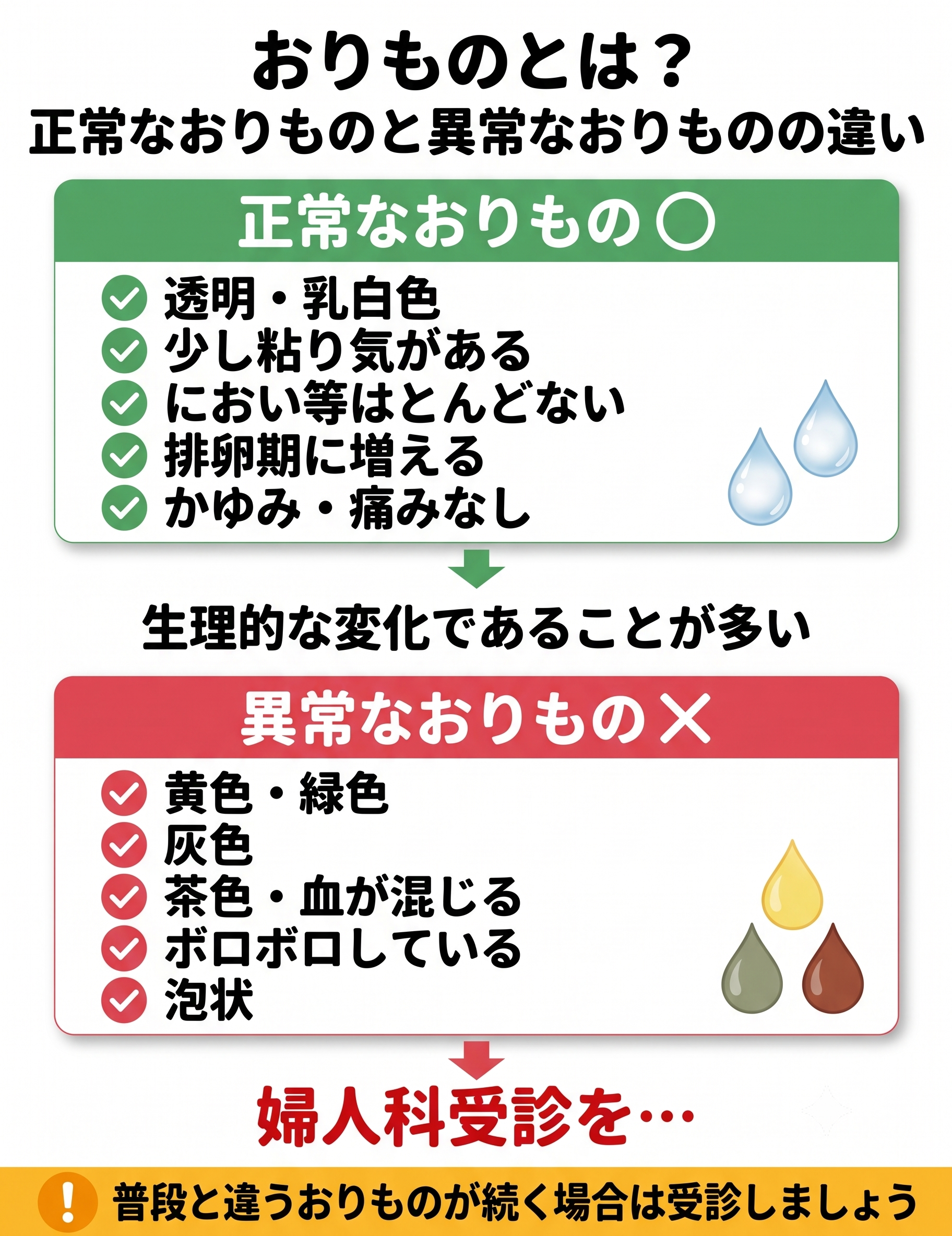
Vaginal discharge consists of secretions from the cervix, vagina and surrounding tissues. The amount and consistency vary between people and may change during the menstrual cycle or pregnancy.
| Timing | Examples of changes | What to look for |
|---|---|---|
| After your period | Discharge may be relatively light | Consider any change from your usual pattern, along with a strong odor, itching, pain or bleeding. |
| Around ovulation | Discharge may become clear, stretchy and more abundant | |
| Before your period | Discharge may become whitish and thicker | |
| During pregnancy | Discharge may increase |
Clear to milky-white discharge without a strong smell, itching or pain can be a normal physiological change. However, color and amount alone cannot reliably distinguish normal discharge from a problem. Please seek advice if you have symptoms that concern you.
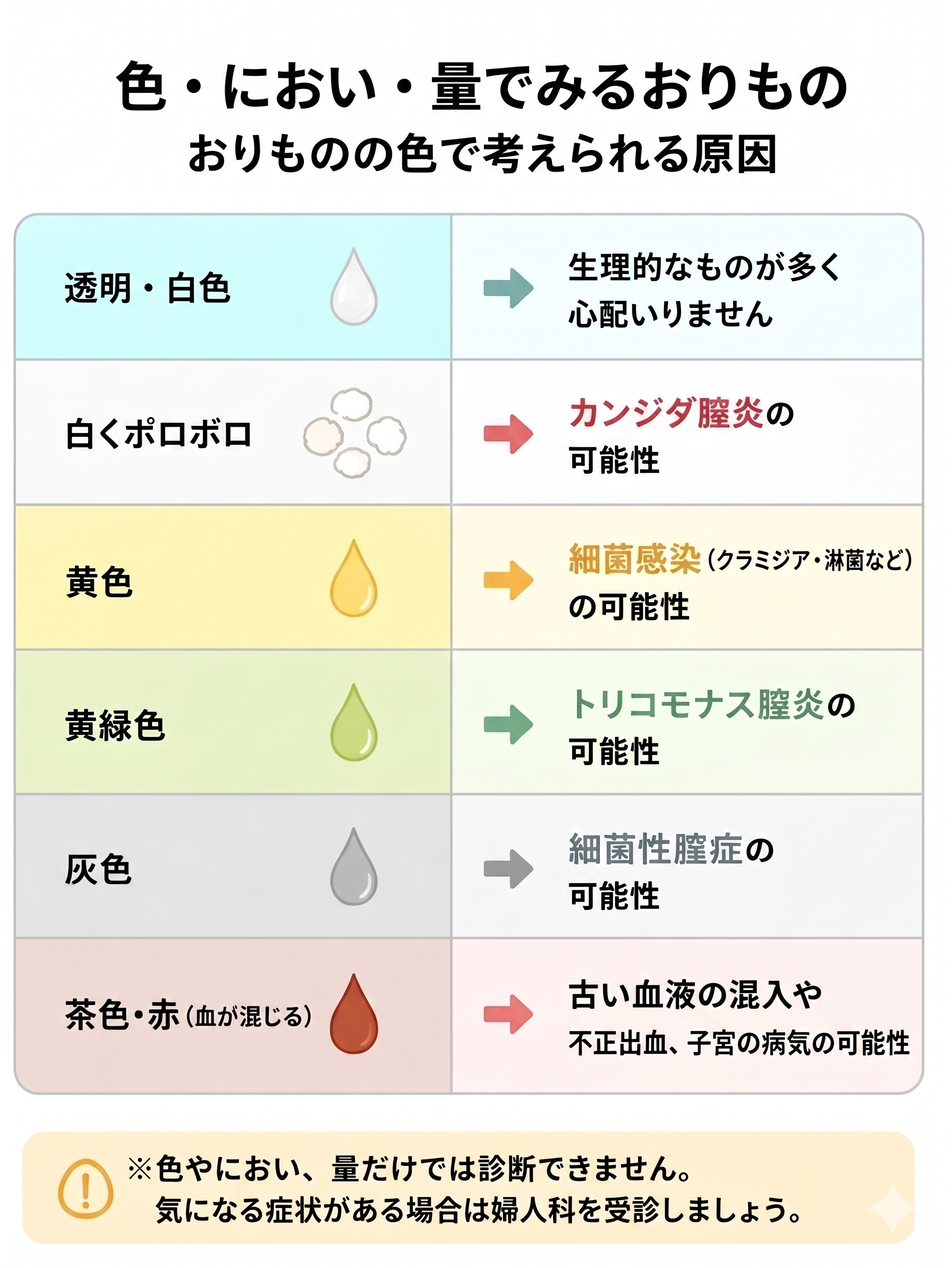
The following are examples of possible causes. Discharge color and texture alone cannot reliably identify the cause or establish a diagnosis.
| Appearance | Possible explanations | Symptoms to discuss |
|---|---|---|
| White and clumpy | Vaginal yeast infection, among other causes | Intense itching, redness or stinging |
| Yellow or yellow-green | Vaginitis, cervicitis or a sexually transmitted infection | Odor, discomfort when urinating or lower abdominal pain |
| Gray or whitish | Bacterial vaginosis, among other causes | Watery discharge or a fishy smell |
| Brown or blood-stained | Blood around your period or abnormal bleeding | Recurring bleeding or bleeding after sex |
| Frothy | Trichomoniasis, among other causes | Odor or itching |
| Watery | Normal physiological changes, vaginitis or other causes | During pregnancy, fluid leakage needs assessment to rule out your waters breaking |
The vagina naturally has an acidic environment, so a mildly sour smell can be normal. If it is much the same as usual, it does not necessarily indicate a medical condition.
Bacterial vaginosis or an infection may be involved. Seek advice if the smell changes suddenly, persists or occurs with other symptoms.
Strongly scented products and repeated washing inside the vagina can cause irritation. Smell alone cannot identify the cause; testing may be needed depending on your symptoms.
Discharge can increase around ovulation or during pregnancy. However, a sudden increase, watery discharge that soaks your underwear, or changes in color or smell may call for assessment for vaginitis or infection.
Fluid leakage during pregnancy needs assessment to distinguish discharge from your waters breaking. Contact your maternity care provider promptly.
Possible causes include a vaginal yeast infection, trichomoniasis and irritation of the vulva. Seek care promptly if you also have lower abdominal pain or fever, as inflammation affecting the uterus or fallopian tubes may need consideration.
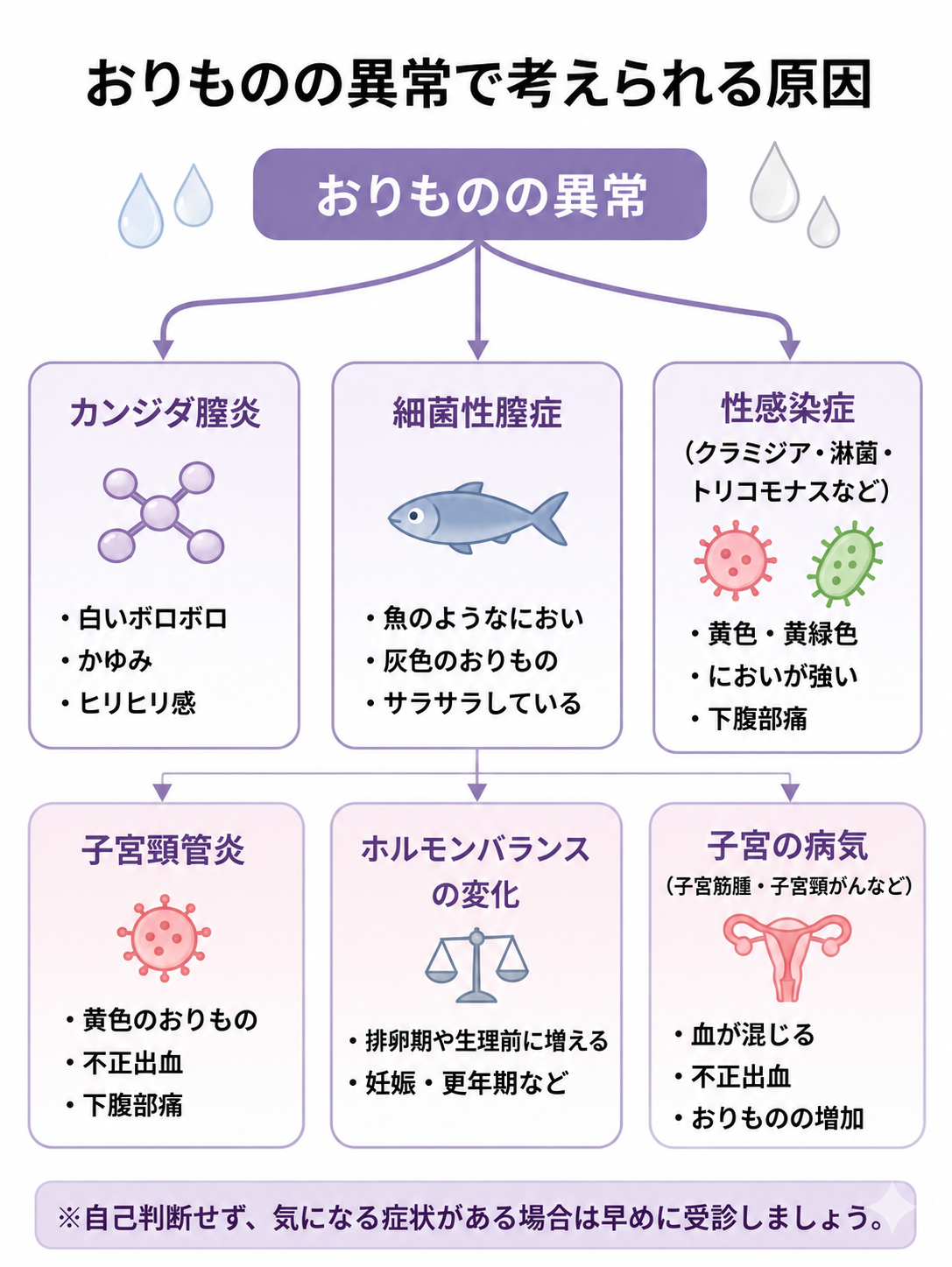
Similar symptoms can require different treatments.
An examination and tests help identify the cause.
May cause white, clumpy discharge and intense itching.
A change in the balance of vaginal bacteria may cause thin, grayish-white discharge or a fishy smell.
May cause yellow-green discharge, odor and itching. Some people have few noticeable symptoms.
Infection of the cervix may cause changes in discharge, unexpected bleeding or lower abdominal pain. There may also be no symptoms.
Lower reproductive hormone levels may contribute to dryness, inflammation or bleeding.
Brown or blood-stained discharge may require assessment for polyps, cervical conditions and other causes.
During pregnancy, contact your maternity care provider.
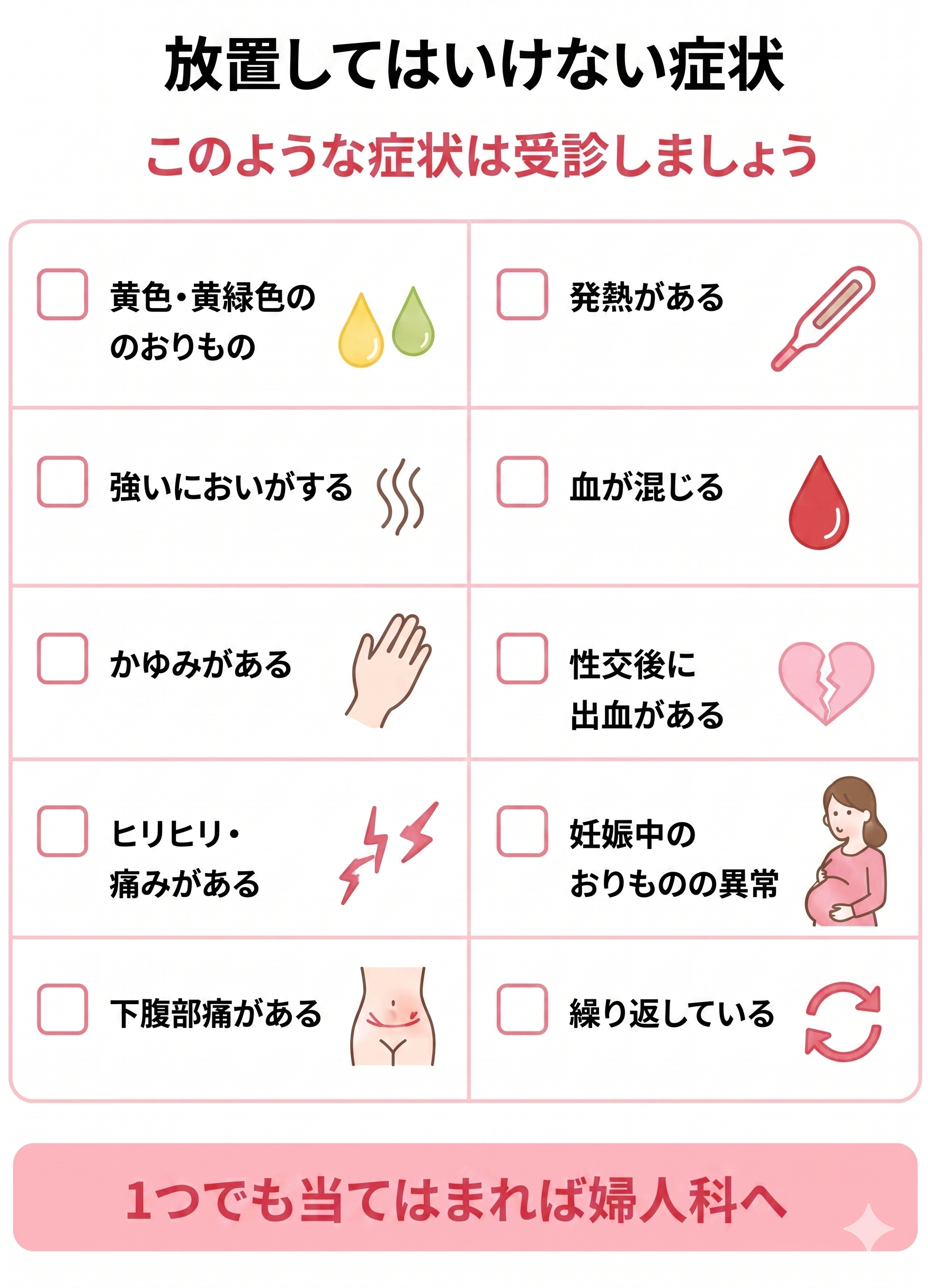
We recommend tests based on your symptoms, the possibility of pregnancy and examination findings.
We ask about color, amount, smell, when symptoms began and any accompanying pain.
When needed, we assess the vulva, vagina and cervix. Please tell us if you are anxious about a pelvic examination.
A sample of discharge may be collected to investigate vaginitis or sexually transmitted infections as appropriate.
Bleeding or lower abdominal pain may call for ultrasound, cervical tests or other assessments.
The time needed for results depends on the test. We will explain this during your appointment.
Treatment depends on the diagnosis. Options may include antifungal medicines for a yeast infection or antibiotics for bacterial vaginosis.
Treatment is specific to the infection. We also advise on partner testing or treatment when needed.
We investigate the cause of bleeding and assess whether further tests or care in collaboration with a hospital or specialist are needed.
Repeatedly using the same medicine without an assessment can mean another cause is missed. Seek advice if symptoms persist or recur.
Avoid excessive washing inside the vagina or rubbing the vulva vigorously. Harsh products can worsen symptoms.
Choose breathable underwear and change menstrual products regularly. If itching or odor persists, seek advice rather than relying on over-the-counter treatment alone.
Not necessarily. Increased discharge does not always indicate a medical condition.
Hormonal changes around ovulation, during pregnancy or before a period can temporarily increase discharge. These changes are often normal and may not be a cause for concern.
However, a sudden increase, yellow, yellow-green or gray discharge, a strong smell, itching, pain or blood may be related to a yeast infection, bacterial vaginosis, a sexually transmitted infection or a uterine condition.
If a change from your usual discharge persists or symptoms recur, we recommend a gynecological assessment rather than diagnosing yourself.
Yes. We recommend an assessment if yellow or yellow-green discharge persists.
Possible causes include infections such as bacterial vaginosis, a vaginal yeast infection, trichomoniasis, chlamydia or gonorrhea. Cervicitis and other gynecological conditions may also be involved.
Prompt assessment is particularly important if you have a strong odor, itching, pain, lower abdominal pain, fever or blood in the discharge.
Color alone cannot establish the cause. If unusual discharge continues or other symptoms concern you, see a gynecologist for appropriate testing.
A vaginal yeast infection occurs when Candida, a fungus that can naturally be present in the vagina, overgrows. Fatigue, stress, insufficient sleep, antibiotic use or pregnancy may trigger symptoms. Alongside changes in discharge, symptoms may include:
Intense itching of the vulva
Burning, stinging or pain
Redness or swelling
Pain when urinating or during sex
These symptoms often occur together.
However, white discharge does not always mean a yeast infection. Bacterial vaginosis, other forms of vaginitis or sexually transmitted infections can also cause changes, so appearance alone is not a reliable basis for self-diagnosis.
Seek an assessment if white, clumpy discharge persists, occurs with itching or pain, fails to improve with over-the-counter treatment, or keeps returning.
A change in smell does not always indicate a medical condition.
A slightly acidic smell can be normal. However, a persistent fishy smell or strong unpleasant odor may be associated with bacterial vaginosis, a sexually transmitted infection or cervicitis.
Symptoms that deserve particular attention include:
• A fishy smell
• A sudden unpleasant change in odor
• Yellow, yellow-green or gray discharge
• Itching or burning
• Lower abdominal pain or unexpected bleeding
If these occur, we recommend an assessment to investigate the cause.
Smell alone cannot establish a diagnosis. However, seek advice if an unfamiliar odor lasts several days or more, or clearly differs from usual. Testing can help identify the cause and guide appropriate treatment.
Brown discharge often contains older blood mixed with vaginal secretions and can be a form of abnormal bleeding.
Around the beginning or end of a period, it may simply be remaining menstrual blood leaving slowly and may be harmless. Light bleeding around ovulation can also appear as brown discharge.
However, seek advice for:
• Persistent brown discharge outside your period
• Brown discharge or bleeding after sex
• A possibility of pregnancy
• Brown discharge after menopause
• Abdominal pain or a strong odor
• Repeated episodes
In these situations, possible causes include cervical polyps, endometrial polyps, cervical cancer, endometrial cancer or infection.
Brown discharge alone cannot identify the cause. If it continues outside the days around your period, or a change concerns you, we recommend assessment and testing.
Discharge with itching of the vulva can have several causes, including a vaginal yeast infection, other medical conditions or skin irritation.
Common possibilities include:
• A vaginal yeast infection (white, clumpy discharge and intense itching)
• Bacterial vaginosis or bacterial vaginitis
• Trichomoniasis
• Sexually transmitted infections such as chlamydia or gonorrhea
• Contact dermatitis (irritation from pads, underwear, soap or similar products)
• Dryness or changes in the vagina and vulva around menopause
An infection may be involved, particularly with yellow or yellow-green discharge, a strong smell, burning, pain when urinating or pain during sex.
Discharge and itching alone cannot establish the cause. If over-the-counter treatment does not help, symptoms recur or they worsen, seek testing rather than continuing to treat yourself.
Changes in color, amount or smell may suggest a sexually transmitted infection (STI), but discharge alone cannot confirm a diagnosis.
STIs may cause:
• Yellow or yellow-green discharge
• Pus-like discharge
• Discharge with a strong smell
• A sudden increase in discharge
• Unexpected vaginal bleeding
• Lower abdominal pain or pain during sex
• Pain or discomfort when urinating
These are some possible symptoms.
However, chlamydia and gonorrhea often cause few or no symptoms early on. An untreated infection can spread to the uterus and fallopian tubes, potentially leading to infertility or an ectopic pregnancy in the future.
Changes in discharge also occur with conditions that are not STIs, such as a yeast infection or bacterial vaginosis. Appearance alone cannot distinguish the cause.
Consider STI testing if you are worried about an infection, unusual discharge persists, or you have had sex with a new partner.
Testing usually involves collecting a small amount of discharge from inside the vagina with a swab. It generally causes little or no pain.
Collection often takes only a few minutes. Testing can help diagnose vaginitis, including yeast infection, bacterial vaginosis or trichomoniasis, and STIs when appropriate tests are performed.
Depending on your symptoms, testing may assess:
• The presence of bacteria or yeast (Candida)
• Signs of inflammation
• The vaginal environment
• Whether an STI may be involved
A pelvic examination, cervical cancer testing or specific STI tests may also be recommended depending on your symptoms.
It is understandable to feel anxious about a first gynecology appointment or a pelvic examination. We explain tests carefully and consider your comfort before proceeding. Please discuss any concerns with us beforehand.
Yes. You can see a gynecologist while menstruating.
Do not delay seeking advice simply because you are on your period if you have severe itching or pain, unusual discharge, unexpected bleeding or lower abdominal pain. Assessment and treatment may still be possible depending on your symptoms.
However, menstrual blood can make some discharge tests or cervical cancer tests harder to interpret accurately. Depending on your symptoms and the test, we may recommend attending after your period or repeating a test later.
Also, seek prompt advice for:
• Bleeding outside your period
• Severe abdominal pain or fever
• A possibility of pregnancy
• Very heavy bleeding
These symptoms need attention whether or not you are menstruating.
If you are unsure when to attend, contact the clinic beforehand. We can advise based on your symptoms.
Over-the-counter medicines may be appropriate in some situations, but we do not recommend choosing a treatment for unusual discharge or itching without appropriate advice.
If you have previously been diagnosed with a vaginal yeast infection and have similar symptoms again, over-the-counter treatment may help. However, changes in color, smell or amount can also be caused by bacterial vaginosis, an STI, cervicitis or other conditions.
See a gynecologist rather than relying on over-the-counter treatment alone if:
• This is your first episode
• You have yellow, yellow-green or gray discharge
• You notice a fishy smell or strong unpleasant odor
• You also have lower abdominal pain or fever
• You have blood-stained discharge or unexpected bleeding
• Over-the-counter treatment has not helped
• Symptoms keep returning
• You are pregnant or could be pregnant
Appearance alone cannot identify the cause. Using an unsuitable medicine may delay diagnosis or worsen symptoms.
If symptoms concern you, testing and treatment tailored to the cause are important.
Increased discharge during pregnancy is common.
Hormonal changes increase secretions from the vagina and cervix, so discharge may become more abundant from early pregnancy until birth. Clear to milky-white discharge without a strong smell, itching or pain is often a normal physiological change.
However, the following symptoms need attention:
• A sudden increase in watery discharge
• Brown discharge or bleeding
• Yellow or yellow-green discharge
• A strong smell
• Itching or pain around the vulva
• Lower abdominal pain or tightening
• Fever
Possible causes include vaginitis or an STI, but fluid leakage or a pregnancy complication may also be involved.
Do not assess unusual discharge during pregnancy on your own. Contact your maternity care provider promptly if symptoms concern you. Identifying the cause early helps protect your health and your baby’s health.
Some changes may settle on their own, depending on the cause, but not all do.
Temporary changes associated with stress, fatigue or hormonal shifts may improve as your health recovers.
However, infections such as a yeast infection, bacterial vaginosis, an STI or cervicitis, and conditions such as cervical polyps, cervical cancer or endometrial cancer, may not resolve on their own and may need appropriate treatment.
Symptoms that deserve particular attention include:
• Persistent yellow, yellow-green or gray discharge
• You notice a fishy smell or strong unpleasant odor
• White, clumpy discharge or intense itching
• Blood-stained discharge or persistent brown discharge
• You also have lower abdominal pain or fever
• Recurring symptoms
For these symptoms, seek an assessment early rather than continuing to wait without advice.
Appearance alone cannot identify the cause. Testing for persistent symptoms can guide appropriate treatment and help detect conditions earlier.
Daily use is not necessarily a problem. However, the way you use liners can contribute to moisture buildup, irritation or itching.
Liners help keep underwear clean, but leaving one on for too long can trap moisture around the vulva. This may contribute to problems such as a yeast infection or contact dermatitis.
If you use liners daily:
• Change them frequently
• Choose breathable underwear
• Avoid excessive washing of the genital area
• Stop using them if itching or irritation develops
• Avoid scented products if they irritate your skin
A sudden increase, yellow, yellow-green or gray discharge, a strong smell, itching or pain may indicate an underlying condition that liners cannot address.
Seek an assessment rather than diagnosing yourself if a change from your usual discharge persists or symptoms concern you.
Even a small change is a valid reason to seek advice. We recommend tests and treatment based on your symptoms.