
Care for period pain and heavy periods in Kobe–Sannomiya
Severe cramps.
Heavy bleeding.
When periods feel hard to manage.
Do you need pain relief every month, spend days in bed during your period, or worry about work and going out because of heavy bleeding? Even symptoms you have come to think of as normal are worth discussing with a gynecologist.
Painful periods and heavy bleeding can have different causes and call for different treatments. We discuss examination, testing and treatment options based on your symptoms and pregnancy plans.
Book an Appointment Online Call Us
Your doctor will determine which assessments and tests are appropriate.
When to seek help for painful or heavy periods
You do not need to base your decision only on how your periods compare with other people’s. If you notice a change from your usual pattern or an impact on daily life, please speak with us.
If pain is your main concern
- Pain relief does not help enough
- You miss school or work, or need to stay in bed
- Your pain has become worse
- You have lower abdominal pain outside your period
- You also have pain during sex or bowel movements
If bleeding is your main concern
- You need to change pads frequently
- Worry about leaks makes it difficult to go out
- You repeatedly pass large blood clots
- Bleeding lasts 8 days or more
- You experience fatigue, dizziness or palpitations
Seek medical advice urgently for sudden, severe abdominal pain, feeling faint, very heavy bleeding, or abdominal pain or bleeding when pregnancy is possible. Do not assume these symptoms are simply period pain. If symptoms are severe at night or when the clinic is closed, seek emergency medical care.
Difficult periods?
We assess both pain and bleeding
← Swipe to scroll the table →
| Your concern | Medical term | What we assess |
|---|---|---|
| Lower abdominal pain, back pain, nausea or other symptoms during your period that disrupt daily life | Dysmenorrhea (painful periods) | When pain occurs, its severity, response to pain relief, and pain at other times |
| Heavy flow, frequent product changes, leaks or concerns about anemia | Heavy menstrual bleeding | Amount and duration of bleeding, clots, and symptoms of anemia |
Some people experience both pain and heavy bleeding. You do not need to know the diagnosis before booking an appointment.
Severe cramps.
What causes heavy periods?
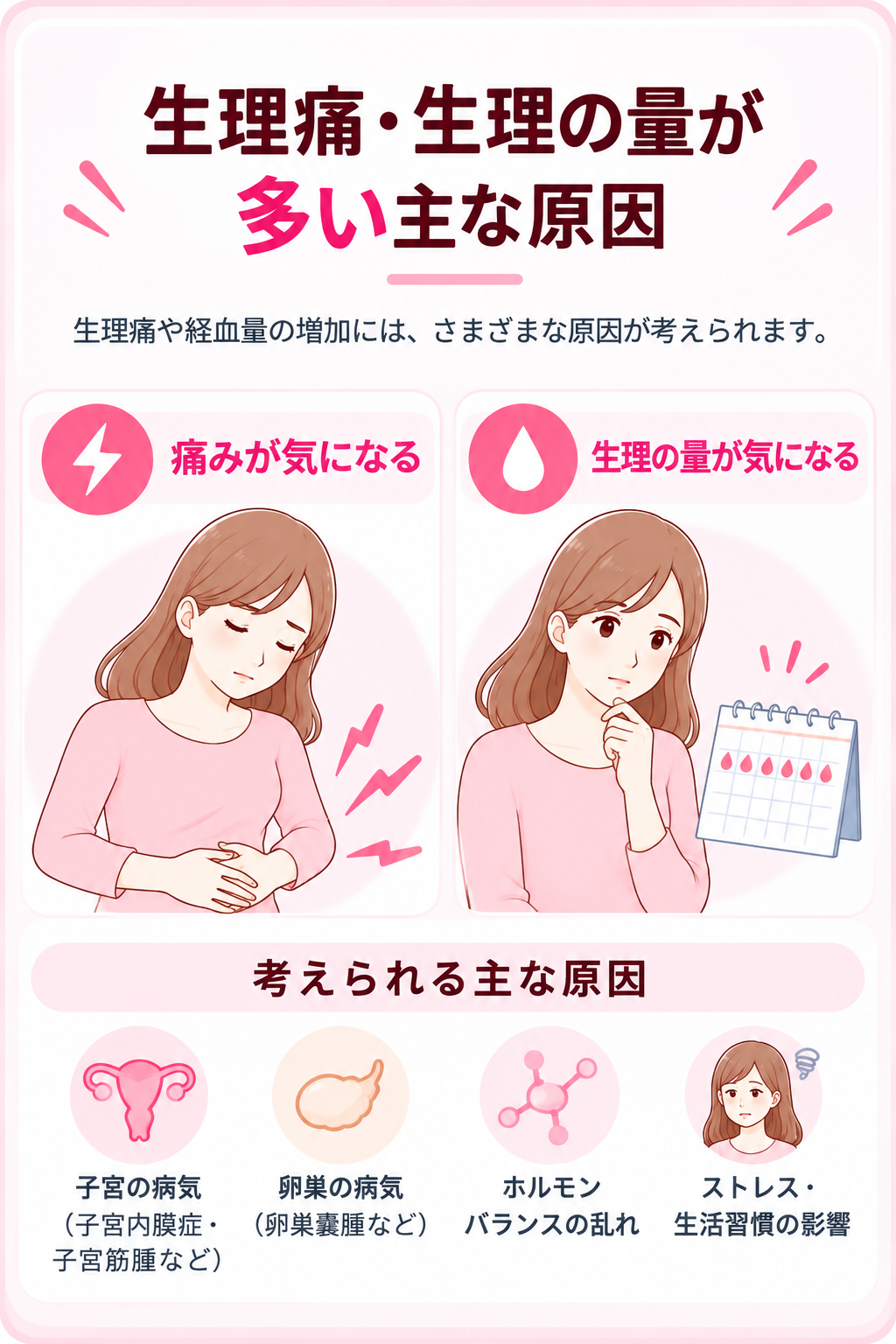
Symptoms alone cannot identify the cause. Period pain may occur without a clearly identifiable abnormality on testing, or it may be associated with a condition affecting the uterus or ovaries.
When no clear abnormality is found
Substances that cause the uterus to contract during menstruation can contribute to pain. Even when tests do not reveal a disease, troublesome symptoms are a reason to discuss treatment.
When an underlying condition is involved
Endometriosis, adenomyosis, and uterine fibroids may be involved. For heavy bleeding, we also consider causes such as endometrial polyps.
Tell your doctor if pain worsens over the years, occurs outside your period, or is accompanied by increased bleeding. Follow the links for more information about individual conditions.Other menstrual concerns, including irregular periods and PMS, are covered on a separate page.
What examinations and tests
might I need?
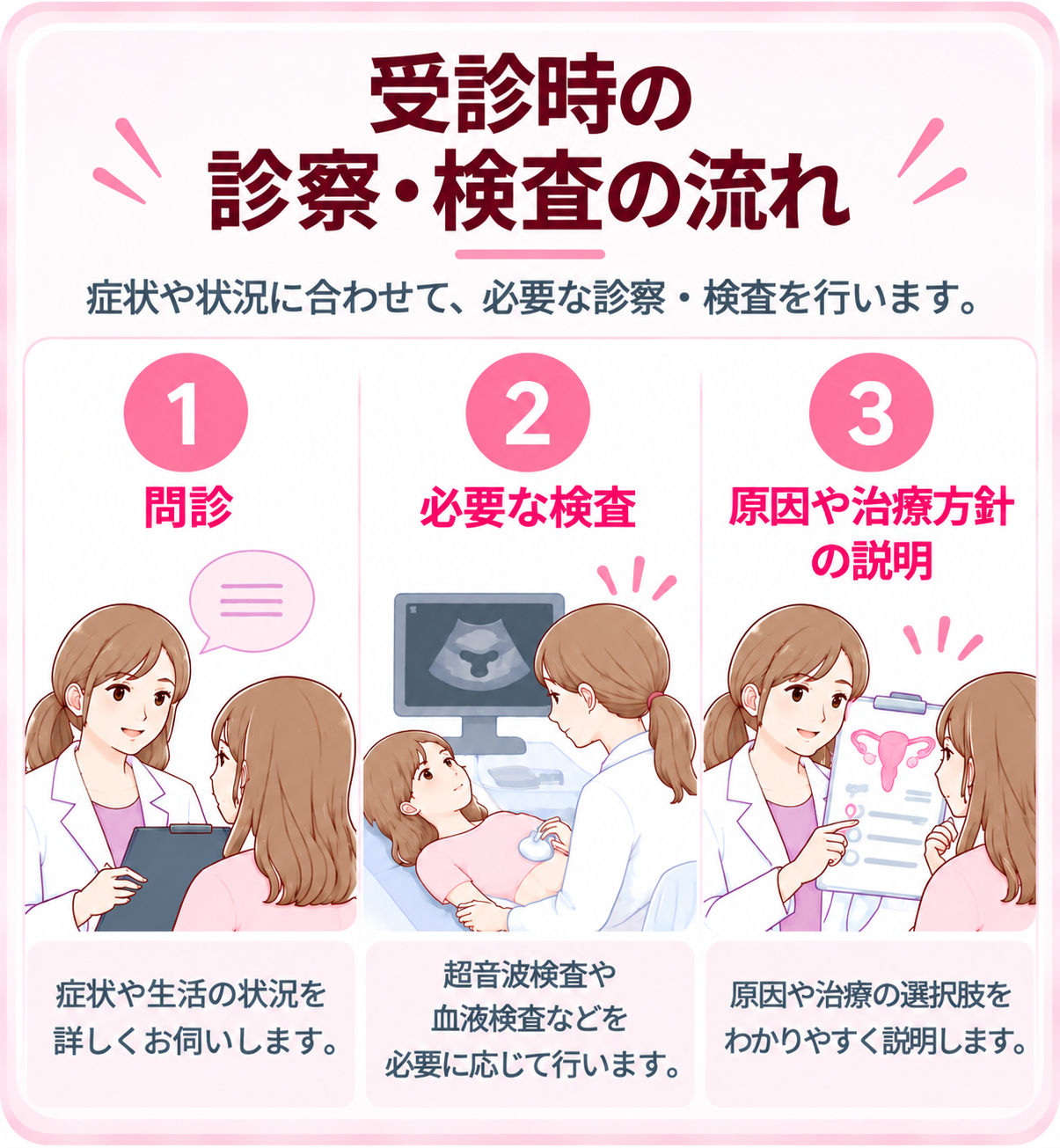
Not everyone needs the same tests. We discuss an approach that takes account of your age, symptoms, possibility of pregnancy, sexual history and any anxiety about a pelvic examination.
We ask when your period started, when and where you feel pain, how much you bleed, how well medication works, your pregnancy plans and any previous medical conditions.
Depending on your symptoms, we may consider ultrasound, blood tests for anemia or a pregnancy test.
We discuss the likely cause and options such as monitoring, medication or referral to another medical service when needed.
Please tell us beforehand if you are uncomfortable with a pelvic examination or have never had sex. Your doctor will discuss possible examination methods based on your symptoms and what needs to be assessed. This does not mean that the cause can always be identified without testing.
Noting the start dates of your periods can be helpful at your appointment.
Main treatments for period pain and heavy bleeding
Treatment depends on the cause, your pregnancy plans, existing conditions and current medications. Not every treatment is suitable for everyone.
← Swipe to scroll the table →
| Option | Purpose and when it may be considered |
|---|---|
| Pain relief | Helps ease pain. If it is less effective or needed frequently, we assess the cause and how the medicine is being used. |
| Low-dose estrogen–progestin combinations and related medicines | May be considered for dysmenorrhea after assessing symptoms and checking for contraindications. |
| Progestin medications | May be considered depending on the condition, symptoms and your individual health profile. |
| Mirena (a levonorgestrel-releasing intrauterine system) | May be considered for heavy menstrual bleeding or dysmenorrhea after assessing suitability. |
| Treatment for anemia and underlying conditions | If anemia is present, we consider treatment for it alongside care tailored to any uterine or ovarian condition. |
For more information about pills and Mirena, visit our pill and Mirena information page. Costs and Japanese health insurance coverage depend on the diagnosis and treatment. Please check at your appointment.
Questions about period pain and heavy bleeding:
Frequently asked questions
Select a question to open the answer. If your symptoms are severe, seek medical advice rather than delaying care to read the answers.
When should I see a gynecologist for period pain?
Consider the effect on daily life as well as the severity of pain. Missing school, work or household activities, changing plans, or needing medication every month are reasons to seek advice. Also speak with a doctor if pain has worsened or medication is less effective. Treatment to ease symptoms may be possible even when tests do not identify an underlying disease.
My period pain is getting worse every year. Could there be an underlying condition?
Endometriosis, adenomyosis or fibroids may be involved, but changes in pain alone cannot identify the cause. Tell your doctor when the pain began, whether it occurs outside your period, and whether your bleeding has changed. An examination and any necessary tests can help assess the cause.
My periods have been painful since they first started. Is that just normal for me?
Some people have dysmenorrhea without an identifiable underlying disease, but long-standing symptoms should not automatically be dismissed as normal for you. Pain that affects school or work deserves treatment. Examination options can be discussed based on your age and symptoms.
Why are painkillers not helping?
The timing, type or dose of medication may play a role, as may an underlying condition such as endometriosis. Do not increase the dose yourself. Speak with a doctor about the cause and treatment options.
When should I take painkillers?
Some painkillers may work better when taken as pain begins rather than after it becomes severe. However, directions and reasons to avoid a medicine differ between products. Follow the package instructions or your prescription, and check with a doctor or pharmacist if you have an existing condition or could be pregnant.
Is it okay to take over-the-counter painkillers every month?
Always follow the recommended dose and directions. However, pain severe enough to require medication every month may indicate dysmenorrhea or an underlying condition such as endometriosis. Rather than enduring the pain or continuing to rely on painkillers alone, consider a gynecological assessment.
I get nausea, diarrhea or headaches with each period. Can I discuss these too?
Yes. Nausea, diarrhea and headaches can accompany menstrual cramps. An unusually severe headache or persistent vomiting may have another cause and should be assessed promptly.
Is lower abdominal pain outside my period still period pain?
Pain outside menstruation may not be explained by period pain alone. Possible causes include conditions affecting the uterus or ovaries, digestive system or urinary tract. Seek urgent medical advice for sudden severe pain, fever, feeling faint, or symptoms when pregnancy is possible.
Should I mention pain during sex or bowel movements?
Yes. Pain during sex or bowel movements alongside period pain may be associated with endometriosis or another condition. We consider your symptoms together when discussing tests and treatment.
How can I tell whether my periods are heavy?
Signs include repeatedly soaking pads quickly, needing to change products overnight, worrying about leaks, or having been told you have anemia. You do not need to measure your blood loss precisely.
I pass liver-like blood clots. Is this abnormal?
One small clot does not necessarily indicate a medical condition. However, repeated large clots, heavy flow or prolonged periods may be associated with heavy menstrual bleeding or a uterine condition.
My periods last 8 days or more. Should I see a doctor?
Periods generally last around 3–7 days. Repeated bleeding for 8 days or more, or bleeding that lasts clearly longer than usual, may be related to abnormal or heavy menstrual bleeding. We investigate the cause as needed.
Can heavy periods cause anemia?
Ongoing heavy bleeding can lead to iron-deficiency anemia. Tell your doctor if you feel unusually tired, lightheaded on standing, short of breath, or have palpitations. Blood tests may be recommended. It is important to address the cause of heavy bleeding as well as the anemia.
An overnight pad becomes soaked in 1–2 hours. What should I do?
This may indicate very heavy bleeding. Seek medical advice the same day if bleeding continues or you have dizziness, palpitations or shortness of breath. If symptoms are severe, such as marked lightheadedness or feeling faint, or the clinic is closed, contact an emergency medical service.
Can I see a gynecologist during my period?
Yes. You can discuss your symptoms while menstruating. If bleeding or pain is severe, attending at that time may help us assess what is happening. Some tests are better performed after your period, but you can still attend as planned. We will advise you during the consultation if any tests should be scheduled for another time.
Will I definitely need a pelvic examination?
Not everyone needs the same tests. We first discuss your symptoms, then the assessments and methods that may be needed. Please tell us beforehand if you are anxious about a pelvic examination, have never had sex, or are worried about pain. We consider available options alongside the information needed for diagnosis and the impact on you.
Can I be examined if I have never had sex?
Yes. We discuss examination and testing options taking account of your sexual history. There are different ultrasound methods, and which can provide the necessary information depends on your symptoms. Please tell us about your concerns first rather than feeling you must endure an examination you are uncomfortable with.
What will I be asked at an appointment for period pain?
We focus on information needed for diagnosis, such as the severity of pain and how your symptoms have changed over time. Tests and treatment are considered according to your symptoms.
Can ultrasound always detect endometriosis?
Ultrasound is important for assessing the ovaries and uterus, but it cannot detect every case of endometriosis. If symptoms persist despite normal imaging, we also consider the course of your symptoms and your response to treatment. Further tests or referral to a specialist may be considered when needed.
What can blood tests show?
For heavy bleeding, blood tests may help check whether you have anemia and how severe it is. Other tests may be needed depending on your symptoms and examination findings. Blood tests alone cannot establish every possible cause of period pain.
What treatments are available for period pain or heavy bleeding?
Options include painkillers, low-dose estrogen–progestin combinations used for dysmenorrhea, progestin medications and Mirena. Anemia may also need treatment. The most appropriate approach depends on the underlying condition, your medical history, medications and pregnancy plans. We discuss this after assessing you.
Why are pills used to treat period pain?
Low-dose estrogen–progestin combinations used for dysmenorrhea act on ovulation and changes in the uterine lining to help reduce pain and bleeding. Japanese health insurance coverage differs from that for pills prescribed primarily for contraception. We assess factors such as migraine with aura and the risk of blood clots before deciding whether they are suitable.
Can period pain be treated if I cannot take the pill?
Yes. Treatment is still possible if you cannot take the pill or it is unsuitable for you. Depending on your symptoms, options may include painkillers, progestin medications or Mirena.
Can Mirena help with both pain and heavy bleeding?
Mirena is an option for heavy menstrual bleeding and dysmenorrhea. It is placed inside the uterus and releases a hormone locally. We assess suitability based on the condition of the uterus, any infection, your symptoms and preferences.
Will my treatment change if I am trying to conceive?
It may. Treatment choices, including hormonal therapy, depend on when you hope to become pregnant. Please tell us about your pregnancy plans at the outset, particularly if you have severe pain or suspected endometriosis. We can discuss ways to relieve symptoms while investigating the cause.
Can teenagers seek help for period pain?
Yes. We encourage teenagers to seek advice early. School, exams and extracurricular activities are important parts of adolescence. Before putting up with pain becomes a habit, treatment suited to your symptoms can help make daily life easier.
My periods have become more difficult in my 40s. Is it just my age?
Age-related changes are not the only possibility. Fibroids or adenomyosis may also be involved. If bleeding has increased, periods last longer or pain has worsened, we should assess for anemia and check the uterus and ovaries. Bleeding that differs from your usual period may be abnormal bleeding.
My pain or flow has changed after childbirth. Do I need an assessment?
Periods can change after childbirth, but persistent severe pain, very heavy flow or prolonged bleeding should be assessed. Tell your doctor whether you are breastfeeding, when periods resumed after birth, and whether pregnancy is possible. These factors also affect medication choices.
I could be pregnant and have period-like bleeding with abdominal pain. What should I do?
Do not assume this is a period. It may be early pregnancy bleeding or a condition requiring urgent care, such as an ectopic pregnancy. Seek medical advice promptly for abdominal pain or bleeding regardless of your pregnancy test result. Consider emergency care for severe pain, dizziness or feeling faint.
Can I also discuss irregular periods or PMS?
Yes. Tell us about changes in your cycle or in your mood and physical health before a period. These details can help us understand how they relate to pain or bleeding. For more information, see our guide to menstrual concerns. If you are unsure which appointment category to select, please contact us before booking.
Struggling with your periods?
Talk to us.
You do not need to find the perfect words to describe your pain or bleeding. Simply tell us when it started and what is making life difficult.