
Sannomiya Ekimae Ladies Clinic is a gynecology (OB/GYN) clinic in Kobe’s Sannomiya area. We offer consultations about delaying or bringing forward your period for travel, weddings, exams, and other plans. We review your cycle, health history, and preferred dates to discuss whether hormonal medication is suitable for you.
Period Delay and Rescheduling | Planning Around Important Events
“My period may overlap with my trip.”
“I want to avoid bleeding on my wedding day or honeymoon.”
“I would like to feel comfortable during exams or a sports competition.”
Hormonal medication may help adjust the timing of your period in situations like these.
Period rescheduling uses prescribed hormonal medication to delay bleeding or bring it forward. People may consider it for travel, weddings, exams, concerts, sports events, and other important plans.
We often receive these requests before long holidays, summer vacations, coming-of-age ceremonies, and graduation trips. Tell us your dates early so we can discuss a suitable plan based on your cycle and health. The outcome cannot be guaranteed.
What Is Period Rescheduling?
Period rescheduling uses hormonal medication to adjust when menstrual bleeding starts.
There are two main approaches:
• Delaying your period
• Bringing your period forward
The appropriate approach depends on your circumstances.
We consider:
• When your next period is expected
• Your event dates
• Your usual cycle length
• Whether your periods are irregular
These factors affect which options may be available.
When Might You Consider It?
• Travel or a hot spring holiday
• Swimming or a beach trip
• A wedding or honeymoon
• A school or graduation trip
• A coming-of-age ceremony
• Entrance exams or professional examinations
• A concert or live performance
• A sports competition
• A business trip or overseas travel
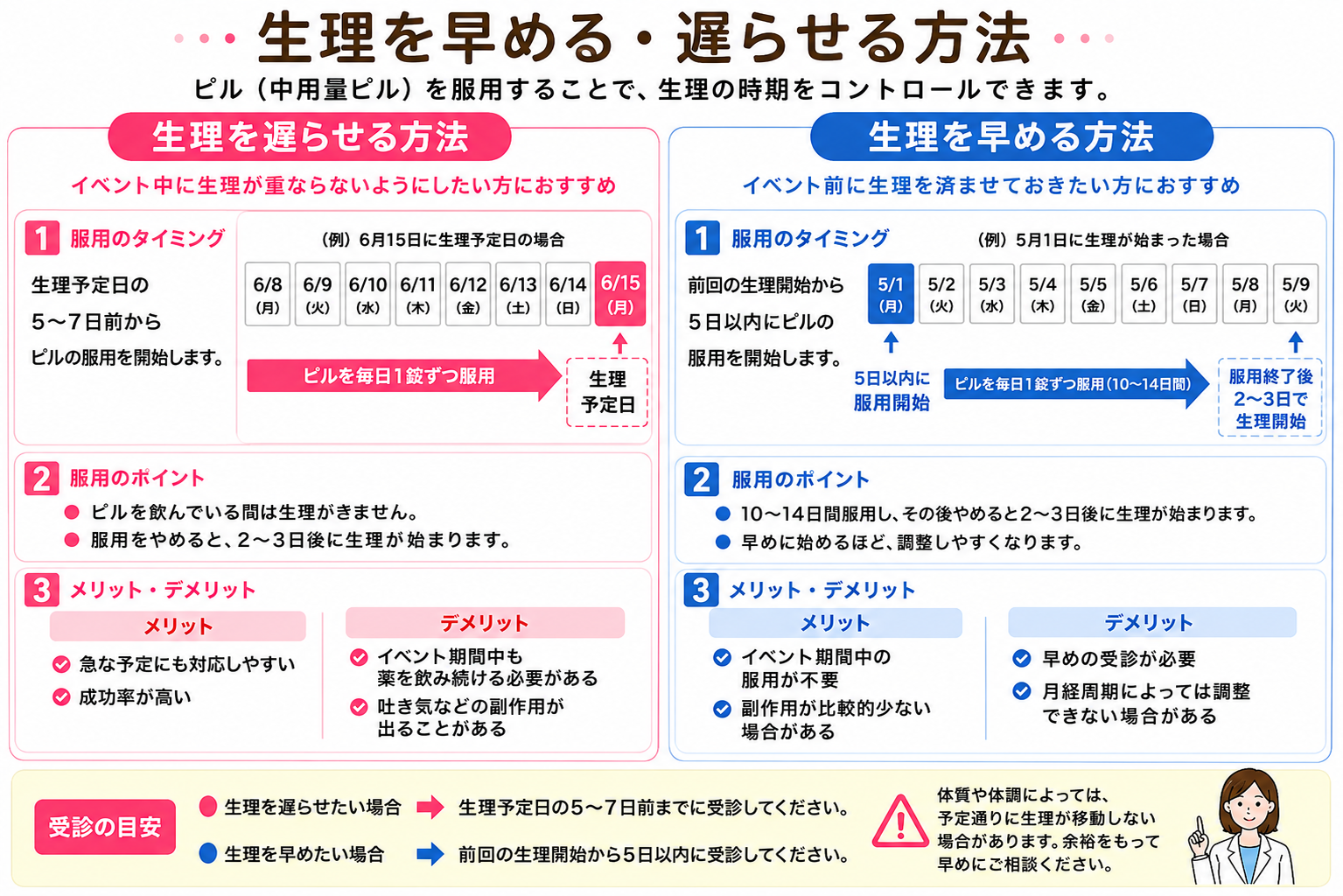
Delaying Your Period
Situations in which this may be considered
• You have a trip next week
• Your plans have changed at short notice
• Your next period is approaching
At our clinic, a regimen may involve starting hormonal medication around 5–7 days before your expected period. The doctor will give instructions for your prescription.
Medication is continued for the prescribed period. Bleeding often starts a few days after you stop, although timing varies and spotting may occur while taking it.
Potential advantages
• May be an option for relatively short-notice plans
• Often effective when started at an appropriate time
• May require only a short course
Considerations
• You usually need to keep taking the medicine during your event
• Side effects such as nausea or drowsiness may occur
Bringing Your Period Forward
Situations in which this may be considered
• Your event is planned well in advance
• You would prefer not to take medication during the event
A regimen may start within the first five days of the preceding period, depending on your cycle and the medicine prescribed.
Medication may be taken for around 10–14 days, with bleeding often beginning a few days after stopping. Follow the doctor’s individual instructions.
Potential advantages
• Medication may be finished before the event
• You may avoid experiencing medication side effects during the event
Considerations
• You need to consult well in advance
• Your cycle or available time may make this approach unsuitable
How Early Should I Book?
If you want to delay your period
Aim to attend at least 5–7 days before your expected period, and earlier if possible.
If you want to bring your period forward
Ideally, discuss your plans before or within the first five days of the preceding period.
Please contact us as soon as you know your event dates.
How Reliable Is Period Rescheduling?
Many people can adjust their bleeding dates when treatment starts at an appropriate time.
However, factors such as:
• Missed doses
• Irregular cycles
• Individual hormonal responses
• Starting too late
can lead to spotting or a period that does not move as planned.
Medicines Used for Period Rescheduling
Our clinic mainly uses a combined hormonal pill with a higher hormone dose than a low-dose contraceptive pill.
We review your medical history, current medicines, and other risk factors before deciding whether a prescription is appropriate.
Possible Side Effects
Side effects vary between people and may include:
• Nausea
• Headaches
• Drowsiness
• Breast tenderness
• Fluid retention or bloating
• Unscheduled bleeding
These symptoms may occur during treatment.
Many are temporary and settle after treatment ends. Contact us if they are troublesome or persistent.
Does It Affect Future Fertility?
Short-term hormonal treatment to adjust a period is not generally expected to cause infertility.
It temporarily changes bleeding patterns. Your usual cycle commonly resumes afterward, although timing may vary.
Can I Reschedule My Period If My Cycles Are Irregular?
It may still be possible in some cases.
Because the next period is harder to predict, the outcome may be less predictable. Please seek advice early.
When Might Treatment Be Unsuitable?
These medicines are not prescribed during pregnancy.
Tell the doctor if pregnancy is possible. A pregnancy test may be needed, and other health factors may also make hormonal treatment unsuitable.
What Happens at the Consultation?
1. Book online or by telephone
2. Attend the clinic and check in
3. Discuss your cycle, health, and preferred dates
4. Receive a prescription if appropriate
5. Start medication on the date instructed
Period Rescheduling at Our Clinic
• Convenient access from Sannomiya Station
• Assessment by a specialist in obstetrics and gynecology
• Advice on period pain, irregular periods, and PMS as well as period timing
Frequently Asked Questions
How Early Should I Book?
For delaying a period, aim to attend at least 5–7 days before the expected start, preferably earlier. Bringing a period forward requires more planning and may involve starting treatment within the first five days of the preceding period. Timing is important, so contact us as soon as you know your travel, wedding, exam, or event dates. Allow extra time before busy holiday periods.
Is period rescheduling guaranteed to work?
No. Treatment often works when started at the right time, but it cannot guarantee a particular bleeding date. Irregular cycles, missed doses, individual responses, or late treatment can lead to unexpected bleeding or an unsuccessful delay. Early consultation gives more time to plan.
Can period rescheduling cause infertility?
Short-term treatment to adjust period timing is not generally expected to cause infertility. Hormonal medication changes the timing of bleeding temporarily, and usual cycles commonly resume after stopping. If you hope to become pregnant, tell the doctor so your plans can be taken into account.
Are there side effects?
Possible side effects include nausea, headaches, drowsiness, breast tenderness, fluid retention, and unscheduled bleeding. Many are mild and temporary, but experiences vary. Tell us if you had problems with hormonal medication before or are concerned about side effects. An anti-nausea medicine may sometimes be prescribed if appropriate.
Will the medication make me gain weight?
Substantial lasting weight gain is not generally expected from a short course. Some people notice temporary bloating or fluid retention, which often settles after stopping. If weight changes or swelling concern you, discuss them with the doctor.
What happens to my next period afterward?
Your usual pattern commonly resumes, but the next period may be a little earlier or later than expected. Individual responses differ. If your period remains absent or abnormal bleeding persists, contact a gynecologist. Pregnancy may also need to be considered if relevant.
Can spotting occur during treatment?
Yes. Light spotting or brown discharge can occur while taking hormonal medication. If bleeding is heavier, resembles your usual period, or is accompanied by significant abdominal pain, contact us for advice. Bleeding may mean the planned timing has not been achieved, but other causes may also need assessment.
Can I Reschedule My Period If My Cycles Are Irregular?
Sometimes. Irregular cycles make the expected period harder to predict, so rescheduling may be less reliable. Arrange your consultation as soon as your plans are confirmed. The doctor may suggest another approach depending on your situation.
Can teenagers ask about period rescheduling?
Yes. Teenagers may consult us for school trips, sports competitions, exams, or studying abroad. Prescribing depends on assessment of the cycle, medical history, and general health. Please discuss any concerns during the consultation.
Is period rescheduling covered by Japanese health insurance?
Adjusting a period for personal plans is generally self-pay because it is not treatment for a diagnosed illness. Consultation and medication fees vary by provider. Please ask about the costs before treatment.
Can I receive a prescription on the day of my visit?
A same-day prescription may be possible after assessment. However, that does not mean a period can be delayed at any stage. Starting just before the expected period may be too late or less reliable. Attend as early as possible so we can review your cycle and preferred dates.
Can I drink alcohol while taking the medication?
Advice depends on the medicine and your health. Drinking heavily can worsen nausea or headaches and make missed doses more likely. Vomiting may also affect absorption. Ask about your prescription and keep to the dosing schedule, particularly when travel or events disrupt your routine.
What if I miss a dose?
Missing doses can cause breakthrough bleeding or make rescheduling less reliable, especially when you are delaying a period. Advice depends on the medicine, how late the dose is, and how many doses were missed. Contact the clinic promptly rather than changing the dose yourself.
Is period-rescheduling medication the same as a contraceptive pill?
Our clinic commonly uses a combined hormonal pill for short-term period rescheduling. The purpose and dosing schedule differ from regular low-dose contraception. Do not rely on a short course for period rescheduling to prevent pregnancy. If you need contraception, discuss a suitable method with the doctor.
Can I take the medication if I might be pregnant?
Tell the doctor if pregnancy is possible before taking medication to adjust your period. A late period or contraceptive failure may require pregnancy assessment first. A test may be recommended, with timing interpreted according to your circumstances.
Can I reschedule my period repeatedly?
Occasional short courses are not generally expected to harm future fertility, but each prescription requires consideration of suitability and risk. If you frequently want to adjust bleeding dates, a regular low-dose pill or another menstrual-management plan may be more appropriate. Discuss your preferences with us.
Can this be arranged through an online consultation?
An online consultation may be an option after reviewing your medical history, current medicines, and cycle. Some people need an in-person assessment. Please contact us about availability, language support, and booking arrangements before relying on this option.
Can I avoid having my period during a trip?
It may be possible. People commonly ask about adjusting periods for travel, hot springs, swimming, or overseas trips. Contact us when your travel dates are confirmed so we can discuss the available approaches. Bleeding-free travel cannot be guaranteed.
Can I avoid my period during an exam?
This may be an option if period pain or other menstrual symptoms could interfere with an exam. Adjusting bleeding dates may help you feel more comfortable, although results vary. Book early once the exam date is known.
Can I adjust my period for a wedding or honeymoon?
It may be possible to plan medication around your wedding or honeymoon. Early consultation provides more time to choose an approach that fits your dates and health. Tell us about travel and other plans when booking.
Can I reschedule my period for a school trip?
Yes, it may be possible after assessment, including for teenagers. Travel, shared bathing, and swimming can prompt these requests. Arrange the consultation well before the trip so there is time to discuss suitability and treatment timing.
Can I avoid a period for swimming or a beach holiday?
Period rescheduling may be an option for swimming, a beach trip, or a holiday. Some people instead choose menstrual products suitable for swimming. If you want to adjust the period itself, consult early, especially before busy summer or holiday periods.
Can I reschedule my period for a concert or other event?
It may be possible. Concerts, live performances, long queues, and travel can be harder to manage with period symptoms. Contact us once your event dates are known so we can discuss whether treatment is suitable.
Can the medication cause blood clots?
Estrogen-containing combined pills increase the risk of blood clots, although clots remain uncommon. A short course is not risk-free. Tell the doctor about previous clots, smoking, age, weight, and other health factors. Seek emergency medical care for sudden breathlessness, chest pain, one-sided leg swelling, or sudden neurological symptoms, and tell the treating team what medication you take.
Can I have sex during treatment?
Sex is not automatically prohibited, but a short course prescribed to adjust your period should not be relied on for contraception. Use an appropriate contraceptive method if you do not want pregnancy. If you feel unwell or have unexpected bleeding, seek advice rather than pushing through discomfort.
What if my period starts while I am taking the medication?
Bleeding may begin because of treatment timing, your cycle, missed doses, or an individual response. Light spotting can occur, but period-like bleeding may mean the delay has not worked as planned. Contact the clinic promptly for instructions rather than stopping or changing the medicine yourself. Heavy bleeding or severe pain needs prompt assessment.
Will my cycles stay irregular afterward?
Cycles commonly return to their usual pattern, although temporary changes can occur. Persistent irregularity is not the usual outcome of a short course, but pre-existing irregular cycles, stress, or lifestyle changes may contribute. Contact a gynecologist if changes persist.
Can I still have period pain during treatment?
Delaying bleeding may reduce menstrual cramps during the intended interval, but it does not guarantee freedom from pain. Some people experience lower abdominal discomfort or bloating with hormonal changes. Seek medical advice for severe or persistent pain or if you feel unwell.
Is there an age limit?
Age alone does not determine suitability. Smoking from age 35 onward, high blood pressure, a history of blood clots, liver disease, and other risk factors can make estrogen-containing pills unsuitable. We assess your health history before deciding whether to prescribe.
Can I reschedule my period while breastfeeding?
Breastfeeding and time since delivery affect which medicines are suitable. Periods may also be irregular, making timing harder to predict. Tell the doctor about breastfeeding and your health so the options can be assessed. Do not take hormonal medication on your own.
At Sannomiya Ekimae Ladies Clinic, we listen to your concerns and help you explore a practical plan. Please contact us about period symptoms or adjusting your period around important dates.