神戸の婦人科・産婦人科|女医|中絶手術・アフターピル・ピル

神戸の婦人科・産婦人科|女医|中絶手術・アフターピル・ピル
Sannomiya Ekimae Ladies Clinic is a gynecology (OB/GYN) clinic in Kobe’s Sannomiya area. We offer consultations for irregular or missed periods, period pain, PMS, and changes in menstrual flow. We assess your symptoms and discuss tests and treatment options based on your health, age, and pregnancy plans.
Irregular, missed or late periods, pain, changes in flow, and PMS can have many causes. Alongside stress and lifestyle changes, an underlying condition may need treatment. We assess your symptoms and discuss your preferences to find an appropriate approach.
Your doctor will determine which tests and treatments are appropriate after your consultation.
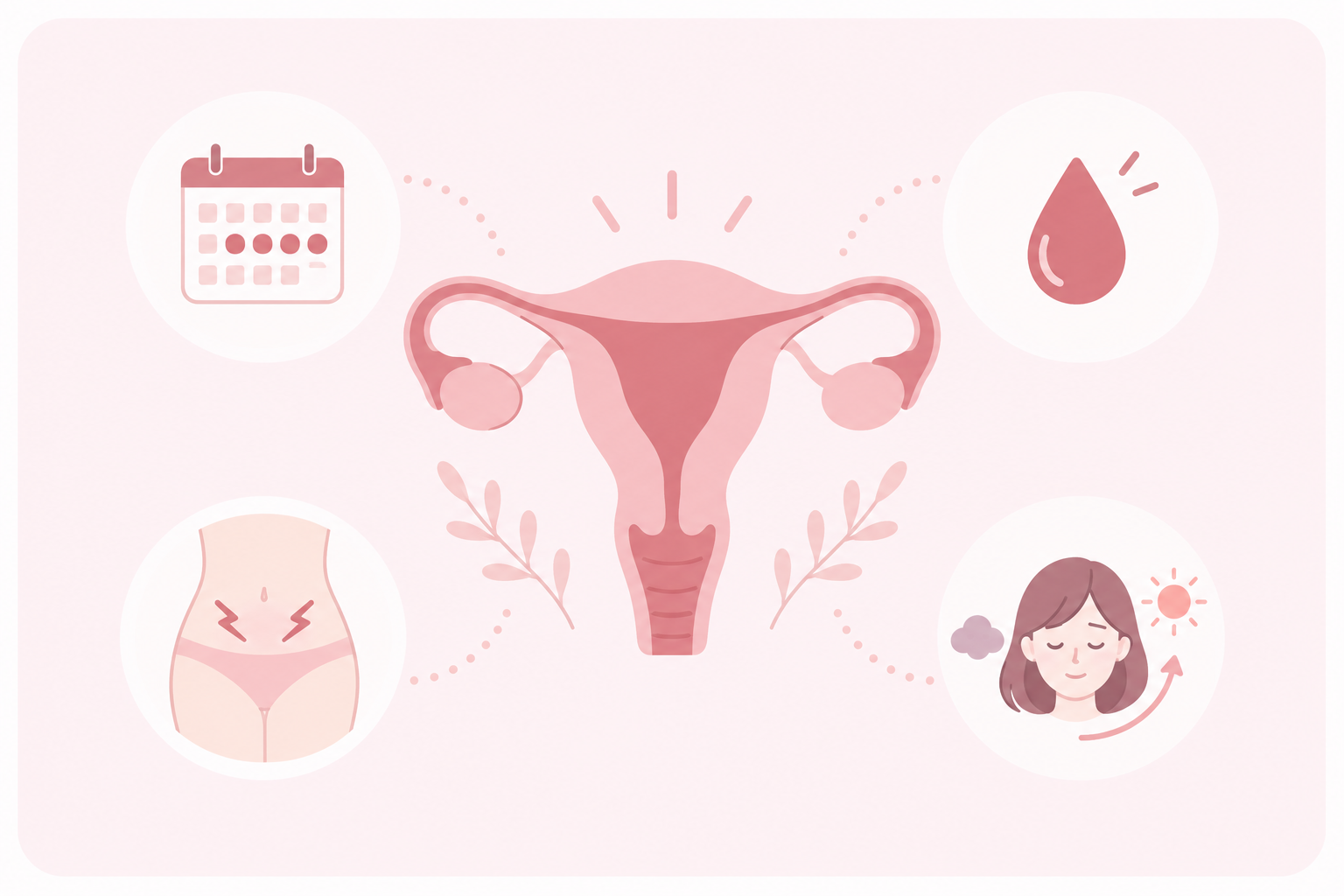
Even if you have just one symptom, speak with a gynecologist if something feels different from your usual pattern.
Your period has not arrived when expected, or is weeks late
Long or short cycles, or sometimes two periods in a month
You rely on pain relief, or pain affects school or work
Heavy, light or prolonged bleeding, or blood clots
For very severe symptoms, or urgent symptoms at night or on holidays, seek emergency medical care.
Periods vary from person to person. A change from your usual pattern or an impact on daily life is also a reason to seek advice.
| Feature | General guide | When to speak with a gynecologist |
|---|---|---|
| Cycle length | 25–38 days | 24 days or less, 39 days or more, or substantial variation between cycles |
| Duration of bleeding | 3–7 days | Bleeding lasting 8 days or more, or consistently very short periods |
| Menstrual flow | Does not interfere with daily life | Frequent pad changes, leaking or anemia |
| Period pain | Does not significantly interfere with daily life | Relying on pain relief, or missing school or work |
| Premenstrual symptoms | Mild, with little impact on daily life | Mood or physical symptoms affecting work, school or relationships |
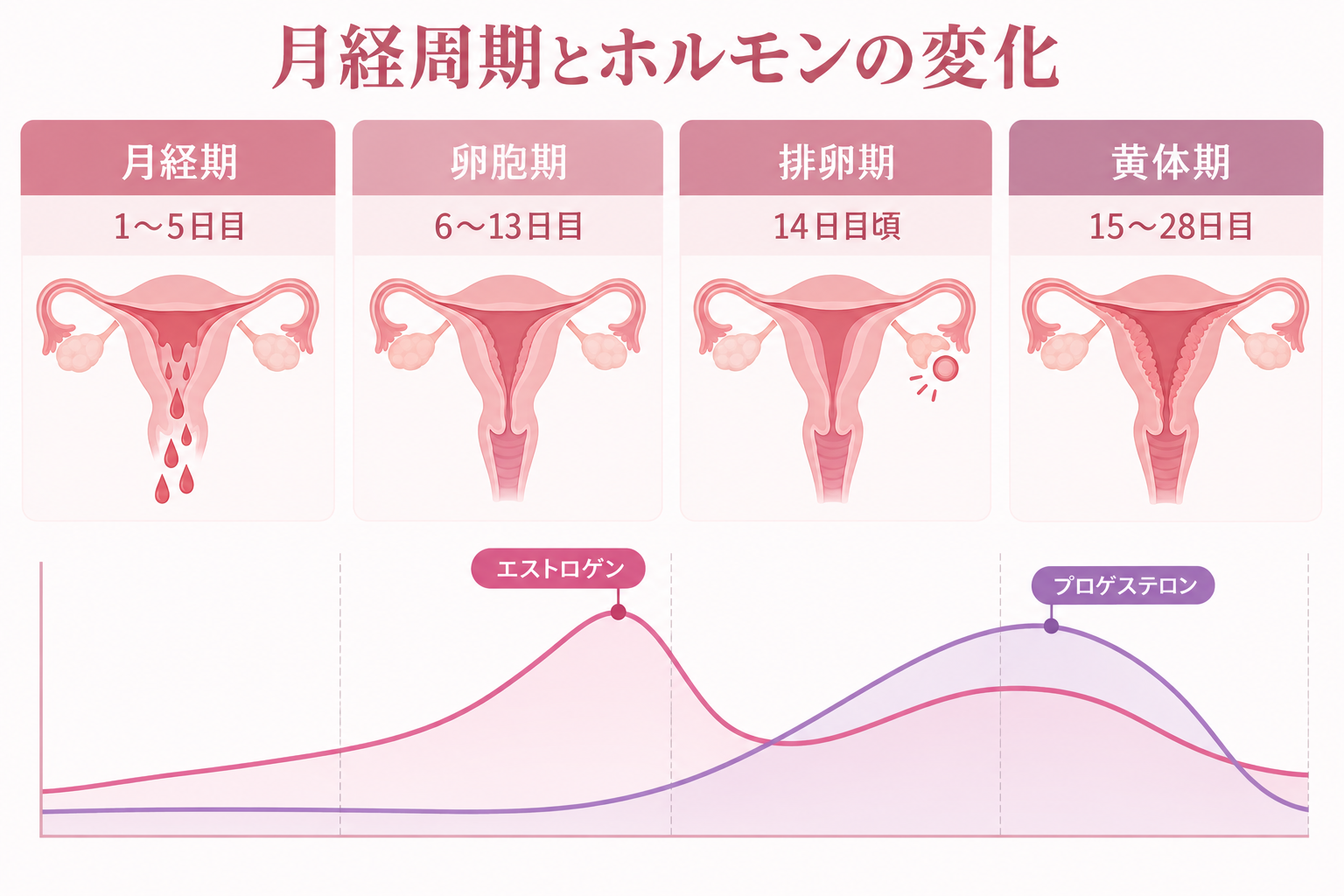
The lining of the uterus and reproductive hormone levels change throughout the cycle. The diagram illustrates a typical 28-day cycle; actual cycle lengths vary.
A delay of a few days is common. First consider whether you could be pregnant, and seek an assessment if the delay continues.
If you have had sex, pregnancy cannot be completely ruled out even if you used contraception. Follow the instructions on when to use a home pregnancy test. Having no periods for 3 months or more when you are not pregnant is known as secondary amenorrhea. If left unaddressed, it can sometimes affect bone health and future fertility.
Irregular periods may mean a different cycle length each time, two periods in a month, or gaps of 40 days or more.
Stress, lack of sleep, changes in your circumstances, puberty and the menopausal transition can disrupt ovulation.
Rapid weight loss, low body weight, excessive exercise and inadequate nutrition can cause periods to stop.
Possible underlying conditions include PCOS, thyroid disease, high prolactin levels and reduced ovarian function.
Period pain that interferes with everyday life deserves treatment. You do not have to put up with it.
Pain occurs without an identifiable underlying disease, often because prostaglandins cause the uterus to contract. This type is more common in younger people.
Pain is caused by a condition such as endometriosis, adenomyosis or uterine fibroids. It may worsen over time or occur with pain during sex or bowel movements.
Options include pain relief, low-dose combined oral contraceptives, progestin medications, Mirena and Kampo herbal medicines. We consider the cause, your symptoms, health and pregnancy plans when discussing treatment.
Needing to change pads frequently, repeatedly passing large, liver-like clots, bleeding for 8 days or more, or experiencing anemia or palpitations may indicate heavy or prolonged menstrual bleeding. Possible causes include uterine fibroids, adenomyosis and endometrial polyps.
Periods that consistently last only 1–2 days, amount to little more than spotting, or consist only of brown discharge may be related to hormonal changes, weight changes, PCOS or the menopausal transition.
These involve recurring physical or emotional symptoms before a period that ease once bleeding begins.
Headaches, lower abdominal pain, breast tenderness, swelling, sleepiness, fatigue and constipation
Irritability, low mood, anxiety, difficulty concentrating and tearfulness
Severe emotional symptoms, or symptoms that substantially affect work, school, relationships or daily life, may require care from a mental health specialist.
Not all unexpected bleeding is a period.
Bleeding may be related to ovulation or hormonal changes, but other possible causes include cervical or endometrial polyps, infections, cervical cancer and endometrial cancer. See a gynecologist for bleeding after sex, recurring unexpected bleeding, or any bleeding after menopause.
Not everyone needs the same tests or a pelvic examination. We recommend an approach based on your symptoms, age, sexual history and whether pregnancy is possible.
We ask about your last period, cycle, flow, pain, medications and pregnancy plans.
Depending on your symptoms, we may recommend a pelvic or other physical examination.
These may include ultrasound, a pregnancy test, blood tests or hormone tests.
Together, we decide on a plan that reflects the cause, your preferences and your lifestyle.
We treat any underlying condition and tailor treatment to your symptoms and future pregnancy plans.
These medicines reduce the production of prostaglandins involved in period pain.
Low-dose combined pills or progestin medications may help improve pain, flow and cycle patterns.
This device is placed inside the uterus and may help treat heavy periods and dysmenorrhea.
These may be considered depending on your symptoms and individual health profile.
We treat iron-deficiency anemia associated with heavy periods or other causes.
Treatment is tailored to conditions such as endometriosis, uterine fibroids, PCOS or thyroid disease.
Mild lower abdominal cramps or a dull ache in the lower back that has little effect on daily life are common. However, if you cannot manage without pain relief every month, or the pain makes you miss school or work, you may have dysmenorrhea or an underlying condition affecting the uterus or ovaries.
Period pain occurs when prostaglandins cause the uterus to contract as it sheds its lining. This is a normal process, but excessive prostaglandin production can cause stronger contractions and reduced blood flow, leading to more intense pain.
The following symptoms may suggest an underlying condition that needs treatment:
• Over-the-counter pain relief does not adequately control your pain
• You cannot attend work or school without pain relief each month
• Pain gets worse with each period
• You have lower abdominal pain outside your period as well
• You also have pain during sex or bowel movements
• Heavy bleeding with frequent large, liver-like clots
Possible causes include endometriosis, adenomyosis and uterine fibroids. Endometriosis is also common in people in their 20s and 30s. Early diagnosis matters because untreated disease can lead to chronic pelvic pain and affect future fertility.
A gynecologist will review your symptoms and may use ultrasound to assess the uterus and ovaries. Depending on the cause, options beyond pain relief includelow-dose combined oral contraceptives, progestin medications (including the mini-pill), and Mirena® (a levonorgestrel-releasing intrauterine system),with treatment tailored to your symptoms and lifestyle.
Many people put up with pain because they think it is just part of having periods, or because their mother had painful periods too. Appropriate treatment can often help. If pain is affecting your quality of life, consider seeing a gynecologist.
Worsening pain or pain relief becoming less effective may indicate progression of a condition such as endometriosis, adenomyosis or uterine fibroids. If your symptoms are getting worse over time, we recommend a gynecological assessment.
Mild period pain from around the time of your first period is common. This is often primary dysmenorrhea, caused by uterine contractions without an identifiable underlying disease.
However, pain that suddenly becomes worse in your late 20s, 30s or beyond, or no longer responds to previously effective over-the-counter medicines, needs attention.
Endometriosis lesions can progress with repeated menstrual cycles and, if untreated, may cause pelvic adhesions or infertility. Adenomyosis may cause heavier or longer periods as well as pain.
The following symptoms may indicate an underlying condition:
• Period pain that worsens each year
• Lower abdominal pain outside your period
• Pain during sex or bowel movements
• Increased bleeding
• A diagnosis of anemia
• Difficulty conceiving despite trying
A gynecologist may perform an ultrasound and further tests as needed. Early diagnosis can help improve symptoms and may reduce the impact on future fertility and pregnancy.
The key is whether your period affects daily life, rather than whether you can endure the pain. Seek advice if you need pain relief every month, miss school or work, or notice worsening pain.
Reasons to arrange an appointment include:
• Pain that does not improve with over-the-counter medicines
• Being confined to bed every month
• Period pain that gets worse over time
• Very heavy menstrual bleeding
• Repeatedly passing large, liver-like clots
• Periods lasting 8 days or more
• Severe nausea or cold sweats
• Planning a pregnancy
Alongside taking your medical history, a gynecologist may arrange ultrasound and blood tests as needed to investigate the cause.
You do not need to wait until symptoms are severe to see a gynecologist. Seeking advice early can give you more treatment options, even while symptoms are still mild.
Pain relief may be less effective if taken too late. An underlying cause of period pain, such as endometriosis or adenomyosis, may also be involved.
NSAIDs (nonsteroidal anti-inflammatory drugs), such as Loxonin® (loxoprofen), reduce pain by suppressing prostaglandin production. They generally work better when taken as pain begins rather than after it becomes severe.
If the medicine has little effect despite correct use, an underlying condition may be present. Increasing the dose yourself or continuing prolonged use also carries a risk of side effects.
If pain relief repeatedly fails to help, it is important to investigate the cause and consider other options, such as a low-dose combined pill or Mirena®.
Yes. Low-dose combined pills are an established option for period pain. By suppressing ovulation and limiting the growth of the uterine lining, they reduce prostaglandin production and can ease pain and bleeding.
Although often thought of only as contraception, these pills are also widely used in Japan to treat dysmenorrhea.
Potential benefits include:
• Less period pain
• Lighter periods
• More predictable cycles
• Possible improvement in PMS
• Potential to help limit the progression of endometriosis
These are among the possible benefits.
However, these pills are not suitable for everyone. Your doctor will assess safety before prescribing, taking account of factors such as age, smoking and existing health conditions.
If you would like relief from painful periods, or painkillers alone are not enough, speak with a gynecologist about treatment options, including a low-dose combined pill.
Cycles of around 25–38 days are generally considered within the normal range. We recommend an assessment if cycles repeatedly exceed 40 days, recur within 24 days, or vary substantially for 3 months or more.
Stress, insufficient sleep or changes in your circumstances can temporarily disrupt your cycle. A single early or late period does not necessarily mean you have a medical condition.
However, persistent patterns such as these need attention:
• Unpredictable cycles that vary every time
• Repeated gaps of more than 40 days
• Two or more periods in a month
• A similar pattern continuing for more than 6 months
• Irregular periods accompanied by severe pain or heavy bleeding
Alongside hormonal disruption, possible causes include PCOS, thyroid disease, high prolactin levels and primary ovarian insufficiency.
Persistent lack of ovulation can contribute to infertility. It may also allow the uterine lining to become excessively thick, increasing the risk of endometrial hyperplasia or endometrial cancer.
A gynecologist will review your history and may use ultrasound or blood tests to investigate. Seek advice rather than deciding on your own to wait, especially if you are trying to conceive or symptoms have persisted.
Having no period for 3 months or more when you are not pregnant is called secondary amenorrhea. A gynecological assessment is recommended to find the cause.
First, check whether pregnancy is possible. If you have had sex, use a home pregnancy test and see a gynecologist as needed.
There are several other reasons why periods may stop, including:
• Significant stress
• Insufficient sleep
• Rapid weight loss through dieting
• Excessive exercise
• Polycystic ovary syndrome (PCOS)
• Thyroid dysfunction
• High prolactin levels
• Primary ovarian insufficiency
These are some of the main possible causes.
Although not having periods may seem convenient, prolonged absence of ovulation can affect future fertility, bone density and hormonal health if left unaddressed.
Persistent lack of ovulation can also adversely affect the uterine lining in some cases.
If you have not had a period for 3 months or more, we recommend seeing a gynecologist rather than deciding on your own that it is nothing to worry about.
A delay of a few days is often related to stress or changes in your health and is not usually a reason for excessive worry. However, a delay of more than a week, or any possibility of pregnancy, deserves attention.
Pregnancy is the most important possibility to consider. If you have had sex and your period is about a week late, check with a home pregnancy test.
Other possible causes include:
• Stress
• Insufficient sleep
• Rapid changes in weight
• Excessive exercise
• PCOS
• Thyroid disease
• The menopausal transition
These can all contribute to changes in your cycle.
Significant delays that recur may be related to an ovulation disorder.
Being a few days late does not necessarily mean you have a medical condition. However, speak with a gynecologist if irregular periods persist, or your period does not arrive despite a negative pregnancy test.
Repeated cycles shorter than 25 days are called frequent menstruation. A single early period may not be a problem, but consistently short cycles should be assessed.
Some variation is expected, but frequently shortened cycles may be related to:
• Hormonal imbalance
• Ovulation disorders
• Hormonal changes during the menopausal transition
• Uterine fibroids
• Endometrial polyps
These are among the possible contributing factors.
Sometimes, what seems to be an early period is actually bleeding between periods.
Light bleeding, persistent brown spotting or bleeding at an unusual point in your cycle may be abnormal bleeding rather than a period.
Speak with a gynecologist if your periods repeatedly arrive early or your bleeding pattern differs from usual.
Not necessarily. However, if irregular periods are caused by infrequent or absent ovulation, conceiving can be more difficult.
A normal ovulatory cycle involves the release of an egg. When irregular periods are associated with absent or disrupted ovulation, it can be harder to identify fertile days, and the likelihood of conceiving naturally may be reduced.
In particular, the following conditions
• Polycystic ovary syndrome (PCOS)
• High prolactin levels
• Thyroid disease
• Primary ovarian insufficiency
can be associated with both irregular periods and difficulty conceiving.
Temporary irregularity linked to stress or disrupted routines may improve as your lifestyle becomes more regular.
If you are trying to conceive and your periods remain irregular, seeking advice early can help you access appropriate tests and treatment. Even if you are not planning a pregnancy soon, menstrual changes can provide important clues about your health. Consider an appointment if symptoms concern you.
Flow varies between people. However, needing to change an overnight pad every 1–2 hours, repeatedly passing large, liver-like clots, or developing anemia may indicate heavy menstrual bleeding, particularly if it affects daily life.
A general reference range for menstrual blood loss is approximately 20–140 mL. Since measuring this in practice is difficult, the effect on daily life is a useful guide.
Consider seeing a gynecologist if you experience:
• An overnight pad becoming soaked quickly
• Feeling you need both a pad and a tampon
• Worry about leaking when away from home
• Large, liver-like clots with each period
• Anemia or lightheadedness on standing
• Periods lasting 7–8 days or longer
Possible causes include uterine fibroids, adenomyosis, endometrial polyps and hormonal imbalance. Hormonal changes during the menopausal transition may also contribute from the 40s onward.
We review your symptoms and may use ultrasound to identify the cause before recommending treatment. Depending on the findings, options may include a low-dose combined pill, Mirena®, or treatment for the underlying condition.
Even if your periods have always been heavy, do not assume this is simply normal for you. Please seek advice if you are concerned.
Light periods do not necessarily indicate a medical condition. However, if they consistently last only 1–2 days or consist only of brown spotting, a gynecological assessment can help clarify the cause.
Possible causes of very light periods include:
• Hormonal imbalance
• Rapid weight loss through dieting
• Significant stress
• Excessive exercise
• Polycystic ovary syndrome (PCOS)
• The menopausal transition
• A thin uterine lining
These are some possible explanations.
If you are trying to conceive, it is particularly important to consider whether an ovulation disorder is involved.
A sudden reduction in flow after previously normal periods, or light periods alongside irregular cycles, may indicate a hormonal abnormality or another underlying issue.
A gynecologist may arrange blood tests or ultrasound as needed to investigate.
Occasional small clots are common. However, large clots with every period, repeated clots or very heavy bleeding may suggest heavy menstrual bleeding or a uterine condition.
Menstrual blood usually flows out of the uterus, but heavy bleeding can allow blood to clot before it passes, producing liver-like clots.
We recommend an assessment if you experience:
• Repeated clots the size of a 500-yen coin (about 2.7 cm) or larger
• The same symptoms with every period
• A sudden increase in menstrual flow
• Anemia, shortness of breath or palpitations
• Severe period pain as well
Possible causes include:
• Uterine fibroids
• Adenomyosis
• Endometrial polyps
• Hormonal imbalance
These are some possible explanations.
Ultrasound can often help identify the cause. Seek advice early if you are concerned.
Periods usually last around 3–7 days. Bleeding for 8 days or more, or consistently prolonged periods, may indicate prolonged menstruation or abnormal bleeding. We recommend an assessment to investigate.
Possible causes of prolonged periods include:
• Hormonal imbalance
• Uterine fibroids
• Endometrial polyps
• Adenomyosis
• The menopausal transition
• Endometrial cancer
These are among the possible benefits.
Bleeding that starts again after you thought your period had ended, or persistent light brown spotting, may also be abnormal bleeding.
Seek advice early if menstrual changes persist after age 40, or your periods have become clearly longer than before.
If bleeding lasts more than 10 days or remains heavy, see a gynecologist promptly rather than assessing it yourself. Dizziness, palpitations or severe abdominal pain make timely assessment especially important.
Possible causes of ongoing bleeding include:
• Hormonal imbalance
• Uterine fibroids
• Adenomyosis
• Endometrial polyps
• Endometrial cancer
• Pregnancy complications, such as miscarriage or ectopic pregnancy
These are some possible explanations.
Seek medical attention as soon as possible if you have:
• Bleeding that soaks an overnight pad within 1–2 hours
• Dizziness, lightheadedness or palpitations
• Severe abdominal pain
• A possibility of pregnancy
• A sudden increase in bleeding
• Repeated large blood clots
A gynecologist will review your symptoms and may use ultrasound to identify the cause and determine treatment.
Waiting for bleeding to stop on its own can allow anemia or an underlying condition to worsen. Seek advice early if bleeding continues.
PMS (premenstrual syndrome) refers to physical and emotional symptoms that typically begin around 3–10 days before a period and ease or disappear once bleeding starts. These symptoms are common, but you should seek advice if they significantly affect daily life, work or relationships.
Changes in estrogen and progesterone are thought to play a role in PMS. There is no single cause; brain chemicals, stress and lifestyle may also be involved.
Common symptoms include:
Physical symptoms
• Lower abdominal pain
• Lower back pain
• Headaches
• Swelling or fluid retention
• Breast tenderness
• Sleepiness
• Marked fatigue
Emotional symptoms
• Irritability
• Feeling more easily angered
• Low mood
• Difficulty concentrating
• Heightened anxiety
• Tearfulness
Symptoms that recur at the same point in your cycle each month may be PMS.
Treatment depends on severity. Lifestyle changes, low-dose combined pills and Kampo herbal medicines may help in some cases.
PMS (premenstrual syndrome) describes physical and emotional symptoms before a period. PMDD (premenstrual dysphoric disorder) involves particularly severe emotional symptoms that substantially disrupt daily life.
PMDD may involve:
• Severe low mood or depression
• Intense irritability
• Difficulty controlling anger
• Severe anxiety
• Problems in relationships
• Being unable to attend work or school
These are some possible symptoms.
PMS can be predominantly physical, and its severity varies widely.
Neither condition is simply imagined or a matter of personality. Both deserve appropriate care.
If symptoms are difficult to cope with, speak with a gynecologist.
Care may involve collaboration with a mental health specialist when needed.
Mild lower abdominal pain around ovulation is common and usually settles within a few hours to about a day. Severe or prolonged pain, or pain with fever or nausea, may indicate an underlying condition.
Ovulation pain is thought to occur when a follicle ruptures to release an egg and irritates the surrounding abdominal tissues.
See a gynecologist if:
• Pain worsens each month
• Pain lasts 2–3 days or longer
• Over-the-counter medicines do not help
• You have a fever
• You have nausea or vomiting
• Pain is severe enough to make walking difficult
Possible underlying conditions include:
• Endometriosis
• Ovarian cysts
• Ovarian bleeding
• Pelvic inflammatory disease
• Ectopic pregnancy
These are among the possible benefits.
Do not assume severe abdominal pain is simply ovulation pain. Seek medical attention promptly.
Bleeding outside your expected period may be abnormal bleeding. Causes range from hormonal changes to conditions affecting the uterus or ovaries, so it is important to investigate.
Abnormal bleeding may appear as:
• Light brown spotting
• Pink discharge
• Bright red bleeding
• Bleeding after sex
It can take several different forms.
Possible causes include:
• Bleeding around ovulation
• Hormonal imbalance
• Cervical polyps
• Endometrial polyps
• Cervical cancer
• Endometrial cancer
• Bleeding in early pregnancy
• Ectopic pregnancy
These are among the possible causes.
In particular, the following conditions
• Recurring bleeding
• Heavy bleeding
• Bleeding after menopause
• Persistent bleeding after sex
If any of these apply, see a gynecologist promptly.
Brown discharge is often older blood leaving the body slowly. Around the beginning or end of a period, it is not necessarily abnormal. However, recurring discharge outside your period, or discharge with abdominal pain, an unpleasant odor or fever, should be assessed.
Possible causes of brown discharge include:
• Light bleeding before or after a period
• Bleeding around ovulation
• Hormonal imbalance
• Cervical polyps
• Endometrial polyps
• Cervical cancer
• Endometrial cancer
• Early pregnancy bleeding
These are some possible explanations.
Prompt assessment is particularly important if:
• Brown spotting continues for several days
• It recurs each month outside your period
• You bleed after sex
• You have severe abdominal pain
• A possibility of pregnancy
• You have bleeding after menopause
A gynecologist will review your history and may arrange ultrasound or cervical screening as needed to investigate the cause.
Do not assume brown bleeding is harmless simply because of its color. Seek advice if you are concerned.
Moderate exercise is generally fine if you feel well. Gentle activity may improve circulation and help ease cramps or low mood.
Walking, stretching and yoga can be manageable during your period and support your overall well-being. On days with severe pain or heavy flow, avoid overexertion and get enough rest.
Intense exercise or prolonged training can disrupt hormones and contribute to irregular periods. Athletes and people who restrict food excessively should take particular care, as periods may stop.
Exercise does not always make period pain worse, but adjust your activity to how you feel. If you have severe pain or unusual bleeding, seek an assessment rather than continuing to exercise.
Yes. Bathing during your period is generally fine. Some people find that warmth improves circulation and eases cramps.
You do not have to limit yourself to showers during your period. If you feel well, there is generally no medical reason to avoid a bath.
However, if you have:
• Very heavy bleeding that day
• Dizziness or symptoms of anemia
• You have severe abdominal pain
a short shower may be a more comfortable option.
At public baths or hot springs, consider hygiene and others using the facilities, and use menstrual products such as tampons or menstrual cups appropriately.
Very hot water or long baths can cause lightheadedness. Choose a comfortable temperature and avoid staying in too long.
Sex during your period is not necessarily prohibited, but infection and unintended pregnancy remain possible, so precautions are important.
The cervix is thought to be slightly more open during menstruation, which may make it easier for bacteria to enter the uterus and could increase the risk of infection.
Pregnancy is still possible during a period, particularly with early ovulation or a short cycle.
Use condoms to help protect against sexually transmitted infections and unintended pregnancy.
See a gynecologist if bleeding continues after sex, or you develop severe abdominal pain or discharge with an unusual odor.
Aim for meals that provide iron, protein and vitamins. Preventing iron-deficiency anemia is particularly important if your periods are heavy.
Foods to consider include:
• Lean red meat
• Liver
• Clams
• Freshwater clams
• Spinach
• Komatsuna (Japanese mustard spinach)
• Soy products
• Eggs
• Oily fish
These are among the possible benefits.
Eating vitamin C alongside iron can improve iron absorption.
Extreme food restriction or dieting can disrupt hormones and cause irregular or absent periods.
A balanced diet can help support your health during menstruation.
Moderate amounts are generally fine, but some people find that too much caffeine worsens period pain or PMS.
Caffeine increases alertness and reduces sleepiness. In some people, its effects on blood vessels and the autonomic nervous system may worsen symptoms such as:
• Irritability
• Anxiety
• Palpitations
• Headaches
• Insufficient sleep
These symptoms may become more noticeable.
Large amounts of coffee or tea can also interfere with iron absorption. If you have heavy periods or anemia, consider when you drink them.
You do not necessarily need to avoid them completely. Around 1–2 cups a day can serve as a guide; include water and caffeine-free tea for hydration too.
Cycles are often irregular for the first 2–3 years after the first period, while hormonal regulation is still developing. However, we recommend an assessment if there is no period for 3 months or more, flow is extremely heavy or light, or pain is severe.
During puberty, communication between the brain and ovaries is still maturing. Ovulation may not occur every cycle, making periods irregular. Some variation alone is not usually a reason for excessive concern.
On the other hand, symptoms such as:
• No period for nearly 6 months
• Very heavy bleeding every time
• Period pain that prevents school attendance
• Severe anemia
may indicate a hormonal problem, blood disorder, or condition affecting the uterus or ovaries.
If symptoms disrupt school or sports, do not dismiss them because you are young. Seek advice early.
Gradually worsening pain in your 20s may be related to endometriosis or another condition. If you need pain relief more often or your pain has intensified, we recommend an assessment.
Endometriosis is common in the 20s and 30s, and lesions may progress with repeated menstrual cycles.
In particular, the following conditions
• Pain during sex
• Pain with bowel movements
• Lower abdominal pain outside your period
• Difficulty conceiving
These accompanying symptoms deserve attention.
Investigating with ultrasound and other tests, then using treatments such as low-dose combined pills or hormonal therapy when appropriate, may improve symptoms and help limit disease progression.
Some people with irregular periods do conceive naturally. However, infrequent or absent ovulation can make conception harder, so investigating early is important.
Ovulation is necessary for natural conception. Persistent irregular periods may be related to conditions such as:
• Polycystic ovary syndrome (PCOS)
• Hormonal imbalance
• Thyroid disease
• High prolactin levels
These conditions may be present even without other obvious symptoms.
If you are trying to conceive, seek advice early rather than waiting for your cycle to settle on its own. This can help you access appropriate tests and treatment.
Severe period pain may also indicate endometriosis, which can affect fertility. If you have both irregular periods and significant pain, we recommend a thorough assessment.
Ovarian function gradually declines in the 40s, and cycles may become shorter or longer. Perimenopause is one possibility, but uterine or ovarian conditions can also cause changes, so avoid diagnosing yourself.
During perimenopause, you may notice:
• Irregular cycles
• Changes in bleeding
• Hot flashes
• Sweating
• Palpitations
• Low mood
These are some possible symptoms.
However, from the 40s onward,
• Uterine fibroids
• Endometrial polyps
• Endometrial cancer
these conditions also become more common.
Do not assume changes are simply due to age. Speak with a gynecologist if they persist.
As menopause approaches, substantial hormonal changes can make cycle timing and flow less predictable. This is common, but it is important to distinguish these changes from abnormal bleeding.
Before menopause, you may experience:
• Late periods
• Early periods
• Heavier bleeding
• Lighter bleeding
• Longer periods
• No period for several months
A range of changes can occur.
However, symptoms such as:
• Bleeding after menopause
• Very heavy bleeding
• Bleeding after sex
• Bleeding with severe abdominal pain
may have a cause other than perimenopause.
Any bleeding after menopause needs a gynecological assessment, as an underlying condition such as endometrial cancer may be present.
For pain, irregular periods or changes in flow, we first discuss your symptoms in detail. We may then recommend ultrasound or blood tests. Not everyone needs the same tests; recommendations depend on symptoms, age and whether pregnancy is possible.
At your first visit, we ask about:
• The first day of your last period
• Cycle length and duration of bleeding
• The severity of period pain
• Changes in flow
• Previous pregnancies and births
• Existing conditions and current medications
• Whether you are planning a pregnancy
If needed, an abdominal or transvaginal ultrasound is used to assess the uterus and ovaries. Ultrasound often helps identify fibroids, signs of endometriosis and ovarian cysts.
If a hormonal problem is suspected, blood tests may be used to assess thyroid function or reproductive hormone levels.
It is understandable to feel nervous about tests or your first gynecology appointment. Please discuss any concerns with your doctor.
No. Not every patient needs a pelvic examination. We consider your symptoms, age and sexual history, and explain why an examination is recommended before proceeding.
For example, with:
• Irregular periods
• Severe period pain
• Heavy menstrual bleeding
• Abnormal bleeding
we may recommend a pelvic examination or transvaginal ultrasound to assess the uterus and ovaries.
For teenagers or people who have never had sex, an abdominal ultrasound may be an option.
Please tell your doctor or a member of staff if you feel anxious or experience pain during an examination. We aim to provide considerate care and help you feel as comfortable as possible.
Ultrasound is a common way to assess the uterus and ovaries. It does not usually cause severe pain.
Depending on your symptoms and circumstances, we may use:
An abdominal ultrasound, performed over the abdomen
A transvaginal ultrasound, using a slim probe inserted into the vagina
A transrectal ultrasound when needed, using a slim probe inserted into the rectum
One method or a combination may be used, depending on your needs.
A transvaginal ultrasound can cause mild pressure, but the examination is usually brief.
Ultrasound can help assess:
• Uterine fibroids
• Findings suggestive of endometriosis
• Adenomyosis
• Ovarian cysts
• The thickness of the uterine lining
These are some of the findings it can assess.
It is an important investigation when looking for the cause of painful or irregular periods.
Yes. You can attend during your period. However, depending on the purpose of your visit, some tests may be easier after bleeding has ended.
For example, with:
• Severe period pain
• Heavy menstrual bleeding
• Bleeding that will not stop
• Severe abdominal pain during your period
For these symptoms, we recommend seeking care even while you are bleeding.
On the other hand, symptoms such as:
• Cervical screening
• Vaginal discharge testing
These may be harder to assess accurately during menstruation, so we may recommend rescheduling.
If you are unsure whether to attend today, please call us for advice.
A first appointment can feel daunting. We begin by listening carefully to your symptoms and concerns, and explain any recommended tests or treatments in clear terms before proceeding.
A typical visit includes:
1. Registration and a medical questionnaire
2. A discussion of your symptoms and medical history
3. An examination, ultrasound or blood tests as needed
4. An explanation of your results
5. A discussion of your treatment plan
There are several treatment options for painful or irregular periods, including:
• Pain relief
• Low-dose combined oral contraceptives
• The mini-pill (progestin-only pill)
• Mirena®
• Kampo herbal medicines
• Treatment for an underlying condition
We recommend options that take account of your age, lifestyle and pregnancy plans.
You do not need to wait until symptoms become severe. Seeking advice early can help identify the cause and allow appropriate treatment.
Yes. Low-dose combined pills may improve several menstrual concerns, including dysmenorrhea, irregular periods, heavy bleeding and PMS. In Japan, they are widely used to treat dysmenorrhea and endometriosis as well as for contraception.
They suppress ovulation and limit the growth of the uterine lining. This reduces the production of prostaglandins involved in period pain. Lighter bleeding may also help improve heavy periods and related anemia.
Potential benefits include:
• Less period pain
• More predictable cycles
• Reduced bleeding
• Possible improvement in PMS
• Potential to help limit the progression of endometriosis
• Possible improvement in acne
However, they are not suitable for everyone. They may be inappropriate for people aged 35 or older who smoke, those with a history of blood clots, or those with severe liver disease.
Before prescribing, we assess safety and consider your symptoms, lifestyle and pregnancy plans. If you are worried about the pill or its side effects, we explain the benefits and risks carefully so you can make an informed decision.
Both are hormonal medicines, but their ingredients and characteristics differ. The most suitable option depends on your health and treatment goals.
A low-dose combined pill contains estrogen and progestin. The mini-pill contains progestin only.
The mini-pill may be considered for:
• People who cannot use estrogen
• People who are breastfeeding
• People whose risk of blood clots needs particular consideration
It may be an option in these situations.
For some people, a combined pill may be a better fit when considering cycle control, contraception and other treatment goals.
There is no single best option for everyone. Discuss your symptoms, medical history and preferences with your doctor.
Yes. Mirena® is a levonorgestrel-releasing intrauterine system used for contraception and to treat heavy menstrual bleeding and dysmenorrhea. It can reduce bleeding and ease pain.
A small device is placed inside the uterus, where it gradually releases a progestin and limits the growth of the uterine lining. This can make periods lighter and less painful.
In particular, the following conditions
• People with anemia due to heavy periods
• People with period pain caused by adenomyosis
• People who would prefer to avoid taking tablets long term
For these groups, it may be a useful treatment option.
Suitability and results vary. Please discuss the details with your doctor.
Kampo medicines may help with period pain, PMS, feeling cold or swelling. Effects vary, so treatment should be matched to your symptoms and individual health profile.
Within the framework of Kampo medicine, treatment aims to relieve symptoms by addressing patterns such as coldness or impaired circulation, known as oketsu (blood stasis).
For example, with:
• People who feel particularly cold
• People hoping to reduce their use of painkillers
• People experiencing PMS symptoms
Kampo medicines may be considered in these situations.
However, Kampo alone may not provide sufficient relief if an underlying condition such as endometriosis or fibroids is present.
First investigate the cause, then discuss appropriate treatment options, which may include Kampo medicines.
When used at the correct dose and as directed, painkillers are often an effective option for period pain. However, if you cannot manage each month without them, or they are becoming less effective, it is important to investigate the cause.
NSAIDs such as Loxonin® (loxoprofen) ease cramps by reducing the production of prostaglandins involved in pain.
For the best effect:
• Take them before pain becomes severe
• Follow your doctor’s or pharmacist’s instructions
• Do not take more than directed
These points are important for appropriate use.
Frequent use over a long period may increase the risk of side effects, including stomach or bowel problems and effects on kidney function.
Pain that does not respond to painkillers may also be a sign of endometriosis, adenomyosis or another condition.
If pain persists, seek an assessment rather than relying only on medication. Your doctor may discuss other options, including a low-dose combined pill or Mirena®.
Yes. Lifestyle adjustments, warmth and moderate exercise may help. However, if pain disrupts daily life, do not rely on self-care alone; a gynecological assessment is important.
Measures that may help include:
• Applying warmth to your lower abdomen or lower back
• Getting enough sleep
• Gentle exercise such as walking or stretching
• Avoiding getting overly cold
• Eating a balanced diet
• Finding ways to manage stress
Painkillers generally work better when taken as pain begins rather than after it becomes severe.
If you rely on painkillers every month, are confined to bed by pain, or notice worsening symptoms, endometriosis or adenomyosis may be involved. Seek advice early if self-care is not enough.
Cold alone cannot be identified as a direct cause. However, many people feel that getting cold reduces circulation and worsens cramps. Coldness alongside disrupted routines may also affect hormonal balance.
If you tend to feel cold, consider:
• Wearing enough layers
• Taking a bath rather than only showering
• Getting moderate exercise
• Choosing warm drinks
These habits may help you feel more comfortable.
However, persistent pain or irregular periods despite addressing coldness may be related to endometriosis, fibroids, PCOS or another condition.
If symptoms continue, speak with a gynecologist rather than attributing them to coldness alone.
Yes. Significant stress, insufficient sleep and major life changes can affect the hypothalamus and pituitary gland, which help regulate reproductive hormones, and may disrupt your cycle.
For example, with:
• Exams
• Starting or changing jobs
• Moving home
• Night shifts
• Relationship difficulties
These circumstances can sometimes trigger late or missed periods.
Changes related to temporary stress may improve as your routine settles. However, irregular periods lasting several months, or accompanied by severe pain or heavy bleeding, may have another cause.
A gynecologist may arrange hormone tests or ultrasound as needed to check for underlying conditions.
Rapid dieting or weight loss can cause periods to stop. Substantial weight loss over a short time or severe food restriction needs particular attention.
When body fat becomes very low, the brain may respond as though the body cannot support pregnancy and reduce reproductive hormone signaling. Ovulation and periods may then stop.
Prolonged absence of periods can lead to:
• Effects on future fertility
• Reduced bone density
• An increased risk of osteoporosis
These are some potential consequences.
If you have had no period for 3 months or more after dieting, see a gynecologist rather than continuing to wait without advice.
Yes. Ongoing insufficient sleep can affect hormonal balance and the autonomic nervous system, potentially contributing to irregular periods or worsening PMS.
Hormonal regulation takes place during sleep. Persistent sleep deprivation can therefore affect ovulation and menstrual cycles.
Lack of sleep may also worsen:
• Irritability
• Low mood
• Fatigue
• Difficulty concentrating
These effects can make premenstrual symptoms feel more intense.
Regular sleep habits support menstrual health and overall well-being.
Leaving painful, irregular or heavy periods unassessed may allow an underlying condition to progress and affect future fertility or health.
For example, with:
• Progression of endometriosis
• Growth of uterine fibroids
• Worsening anemia
• Infertility related to ovulation disorders
• An increased risk of endometrial cancer with persistent lack of ovulation
These are some possible consequences.
Not every menstrual change indicates a serious condition, but seek advice early if something feels different from your usual pattern.
You may have heard that period pain disappears after pregnancy or childbirth, but this is not true for everyone.
Periods stop during pregnancy, so menstrual symptoms temporarily disappear. Some people also experience less pain after giving birth.
However, when endometriosis or adenomyosis is the cause, symptoms may persist or return after childbirth.
Rather than postponing care in the hope that childbirth will resolve the problem, seek appropriate treatment for your current symptoms.
Yes. People with irregular periods also go through menopause, although the underlying cause may require attention.
PCOS or hormonal abnormalities, for example, can cause long-standing menstrual irregularity.
During perimenopause, cycles also commonly become shorter or longer.
However, abnormal bleeding or bleeding after menopause may be caused by endometrial cancer or another condition. Avoid assuming it is simply a menopausal change.
Consider whether symptoms affect daily life or represent a change from your usual pattern, rather than focusing on whether you can endure them.
We recommend an appointment for symptoms such as:
• Period pain that gets worse over time
• No period for 3 months or more
• A sudden increase in menstrual flow
• Periods lasting 8 days or more
• Bleeding outside your period
• Persistent irregular periods while trying to conceive
Seeking advice early can help identify the cause and allow you to start treatment suited to your needs.
We see patients with a wide range of menstrual concerns, including pain, irregular periods, PMS, heavy or very light periods, and abnormal bleeding.
We listen carefully to your concerns and investigate the cause with ultrasound, blood tests or other assessments as needed.
Depending on the cause, your lifestyle and pregnancy plans, we may recommend:
• Pain relief to ease symptoms
• Low-dose combined pills or the mini-pill
• Mirena®
• Kampo herbal medicines
• Hormonal therapy
• Treatment for underlying conditions such as fibroids or endometriosis
You do not have to put up with period problems. We aim to understand your individual concerns and provide a supportive setting where you can seek advice with confidence.
Changes in your periods can be a sign that something needs attention. We can investigate the cause and help you find ways to make each month more manageable.