Language Support
We provide care using limited English and smartphone translation apps, as explained above. If you need an interpreter or help with the Japanese booking system or consent forms, please contact us before your visit to discuss the arrangements.
If you have severe abdominal pain, heavy bleeding, fainting, or feel seriously unwell, seek urgent medical care rather than waiting for an online appointment.
Same-Day Surgical Abortion in Kobe and Sannomiya
Considering an abortion in Kobe or Sannomiya? Sannomiya Ekimae Ladies Clinic offers surgical abortion up to 11 weeks and 6 days of pregnancy, performed by physicians designated under Japan’s Maternal Health Act. We use manual vacuum aspiration (MVA) with intravenous (IV) anesthesia. Same-day treatment may be available after a medical assessment, depending on appointment availability. Our clinic is close to Sannomiya Station. You can book an appointment online.
Requesting a same-day procedure
Please call to book, or select “Abortion consultation” when booking online.
For a same-day procedure, please book a morning appointment and contact the clinic in advance to confirm the arrangements.
Please also read“Five things to know before a same-day procedure”before your visit.
Total Surgical Abortion Procedures
1,687procedures
Combined total across both clinics in our medical group
Reporting period: June 2022–September 2026
Our experience at our Kobe–Sannomiya and Himeji clinics informs the personalized care we provide to each patient.
This total combines procedures at Sannomiya Ekimae Ladies Clinic and Himeji no Mori Ladies Clinic.
Abortion Care Videos: Information Before Your Visit
These videos explain consultations and surgical care at our clinic and may help you prepare questions for your appointment. Your doctor will explain which options are suitable for your stage of pregnancy and health. The videos are in Japanese; please check whether English subtitles are available.
Abortion consultation and treatment at our clinic (video in Japanese)
Our clinic director explains surgical abortion (video in Japanese)
An Overview of Same-Day Surgical Abortion
Swipe to scroll the table
| Item | Details |
|---|---|
| Physician | A physician designated under the Maternal Health Act provides care |
| Same-day treatment | Available in some cases, depending on the assessment and surgical schedule |
| Procedure | MVA (manual vacuum aspiration) |
| Anesthesia | Intravenous anesthesia to reduce procedural pain |
| Location | Accessible from Sannomiya, Kobe, Osaka and the wider Kansai area |
| Appointments | Book online 24 hours a day, or call during clinic hours |
Our Approach to Care
A designated physician
from consultation through surgery
Surgical abortion under Japan’s Maternal Health Act is performed by designated physicians. Our physicians provide assessment, treatment and follow-up care.
Same-day treatment
when appropriate
Same-day treatment may be possible after the doctor checks your stage of pregnancy, examination findings, and suitability for the procedure.
Intravenous anesthesia
for pain management
We use IV anesthesia during the procedure to reduce pain and anxiety. Your response to anesthesia and recovery time may vary.
Recovery before
going home
You will rest in the recovery area before going home. Some patients may be ready to leave after about 30 minutes, but you will only be discharged once the team confirms that you have recovered sufficiently.
MVA
(manual vacuum aspiration)
We use MVA, a type of vacuum aspiration recommended by WHO for early surgical abortion. The doctor will explain the method and its risks.
Same-day appointments
subject to availability
If the assessment shows that treatment is suitable for you and a surgical slot is available, you may be able to have the procedure on the day of your consultation.
Outpatient abortion care
in Kobe and Sannomiya
We consider your physical and emotional needs when providing MVA (manual vacuum aspiration) with anesthesia on an outpatient basis at our clinic.
Pain management: We use IV anesthesia during the procedure. Side effects such as nausea or drowsiness can occur, and responses vary.
Our surgical method: We use vacuum aspiration, a method recommended by WHO for early surgical abortion.
Going home the same day: You can usually go home the same day once you have recovered sufficiently and the doctor approves your discharge.
Please tell the staff if you have work or other commitments after treatment. Your discharge time will depend on your recovery. Do not drive or plan activities that require alertness for the rest of the day after anesthesia.
Surgical Abortion Care from Designated Physicians
Our team assesses your health and explains the procedure, anesthesia, possible complications and recovery before treatment.
When clinically appropriate, preoperative assessment and surgery can take place on the same day, whether or not you have previously given birth.
If repeated visits are difficult because of school or work,
please discuss your scheduling needs with us.
We will explain the options available to you.
Care from physicians
experienced in abortion procedures
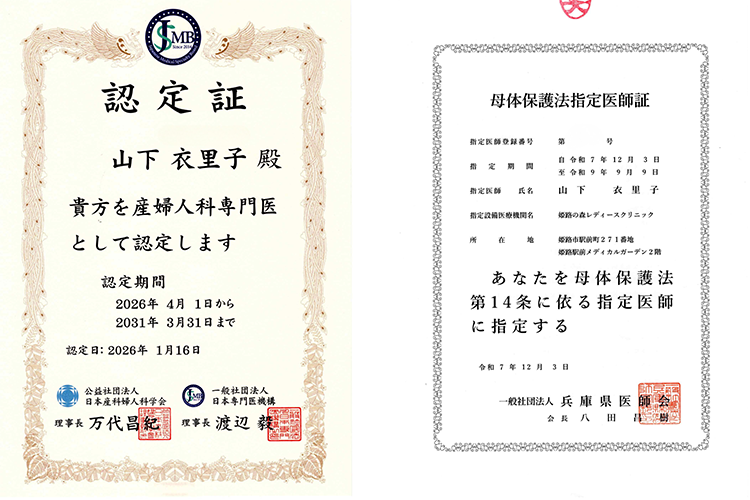
Procedures are performed by physicians designated under the Maternal Health Act who have experience in surgical abortion.
We prioritize safety and adapt the treatment plan to your condition. No procedure or anesthesia is completely free of risk.
If you have concerns about surgery, please contact us for a consultation.
Considering Abortion Care in Kobe?
Our clinic is located close to Sannomiya Station, approximately a 30-second walk from a nearby station entrance.
Patients visit us from Chuo, Higashinada, Nada, Hyogo, Nagata, Suma, Tarumi and Nishi wards in Kobe.
We also see patients from Nishinomiya, Amagasaki, Ashiya, Akashi, Kakogawa, Himeji and other areas of Hyogo, as well as Osaka, including the Umeda area.
Our location near Sannomiya Station makes it easier for patients in Kobe and the surrounding area to attend consultations and postoperative follow-up appointments.
Features of Our Surgical Abortion Care
At Sannomiya Ekimae Ladies Clinic, we aim to minimize discomfort and provide care that takes your physical health into account. We use IV anesthesia during the procedure.
The doctor will explain the method and what to expect on the day.

Point 01
Cervical preparation tailored to your needs
We useMVA (manual vacuum aspiration)for surgical abortion. A separate cervical preparation procedure may not be necessary in some patients.
The need for cervical preparation or dilation depends on your stage of pregnancy and examination findings. Your doctor will explain whether either is needed.

Point 02
Intravenous anesthesia for pain management
Anesthetic medication is administered through an intravenous line.
We check that the anesthesia has taken effect before starting and monitor your comfort throughout the procedure. Responses to anesthesia vary.
Recovery and side effects depend on the medication and your condition. Nausea, dizziness or drowsiness may occur.

Point 03
A short procedure (often around 5 minutes)
MVA (manual vacuum aspiration)often takes around 5 minutes for the procedure itself, although timing varies.
Afterward, you will usually rest for about 30–60 minutes, or longer if needed, until the team confirms that you are ready to leave.

Point 04
Same-day treatment may be available
You will first have a consultation, examination, and any necessary preoperative tests. Same-day surgery depends on the results, your preparation, and the available surgical slots.
Please contact us in advance if you are interested.

Point 05
Contraception
at the time of your procedure
If clinically suitable, a Mirena intrauterine system may be inserted while you are under anesthesia during the procedure.
Combined oral contraceptives and progestin-only pills may also be prescribed following assessment. The doctor will explain when to start.
From Consultation to Outpatient Treatment: An Illustrated Guide (Japanese)
This Japanese-language comic shows one example of booking an appointment, attending a consultation, having an outpatient procedure, and going home. The story is fictional and is not a patient testimonial. Your treatment and the time needed will depend on your assessment and appointment availability. English information is provided in the sections below.


What Is Induced Abortion?
An abortion is a medical procedure to end a pregnancy. The available methods and care arrangements depend on your stage of pregnancy and health.
An early consultation can help you understand your options and the time available to consider them. You can seek advice even if you have not yet made a decision.
Swipe to scroll the table
| Early abortion[Before 12 weeks] | Abortion from 12 weeks [12 weeks to before 22 weeks] | |
|---|---|---|
| Stage of pregnancy | About 4 weeks to 11 weeks and 6 days; treatment depends on assessment | 12 weeks to 21 weeks and 6 days |
| Method | Vacuum aspiration (MVA or EVA); other methods depend on the facility | Usually a medically induced delivery at a suitable hospital or clinic |
| Hospital stay | Usually an outpatient procedure, if suitable | Inpatient care is generally required |
| Administrative procedures | Stillbirth registration is not generally required before 12 weeks; clinical consent and other documents are still needed | Stillbirth registration and related burial/cremation arrangements |
An early consultation helps you understand your options
You do not have to face this alone. Please seek advice from a healthcare professional promptly.
It is understandable to feel uncertain or worried about an abortion.
Sannomiya Ekimae Ladies Clinic offers consultations with physicians designated under Japan’s Maternal Health Act.
You can make an appointment online at any time or call during clinic hours.
Abortion Care by Week of Pregnancy
Swipe to scroll the table
| Gestational age | Possible ultrasound findings | Treatment at this clinic | Clinical considerations | What to know |
|---|---|---|---|---|
| 4 weeks | A gestational sac may not yet be visible | Depends on medical assessment | Pregnancy location may still be uncertain | Confirm the pregnancy and assess for ectopic pregnancy |
| 5 weeks | A gestational sac can often be seen | May be possible after assessment | Confirm the pregnancy’s location and gestational age | Discuss available options |
| 6 weeks | Embryonic cardiac activity may be visible | May be possible after assessment | Medical assessment is required | Ultrasound findings vary |
| 7 weeks | Cardiac activity is often visible | May be possible after assessment | Your symptoms and health are assessed | Nausea may be present |
| 8 weeks | The pregnancy continues to develop | May be possible after assessment | Treatment is planned according to your condition | Nausea may become more noticeable |
| 9 weeks | Further development is visible | May be possible after assessment | Preparation and timing are reviewed | Arrange a consultation promptly |
| 10 weeks | Later part of early pregnancy | May be possible after assessment | Approaching the latest stage treated at this clinic | Discuss scheduling promptly |
| 11 weeks | The final week in which this clinic provides treatment | May be possible up to 11 weeks and 6 days, after assessment | Allow time for tests, preparation, and scheduling | Treatment arrangements change from 12 weeks |
| 12 weeks and later | Abortion care from 12 weeks | Not performed at this clinic | Specialist inpatient care is generally needed | Additional administrative procedures apply |
Abortion at 4 Weeks
At around 4 weeks of pregnancy, your period may be due or just late. A missed period or positive pregnancy test may be the first sign that you are pregnant.
A gestational sac may not yet be visible on ultrasound. The doctor will assess where the pregnancy is located and check for the possibility of an ectopic pregnancy. Treatment at this stage is not always possible; repeat ultrasound scans, blood tests, or follow-up may be needed.
If you are considering an abortion, arrange an assessment to clarify your stage of pregnancy and options. An early positive pregnancy test alone does not confirm that a same-day procedure will be possible.
Abortion at 5 Weeks
A gestational sac can often be seen by ultrasound around this time. Some patients begin to experience nausea.
Early surgical abortion may be an option after assessment. The procedure, bleeding, discomfort, and recovery time vary from person to person.
You may attend a consultation even if you are undecided. Confirming gestational age can help you consider your next steps.
Abortion at 6 Weeks
Cardiac activity may be visible on ultrasound at around 6 weeks. These findings can bring up different emotions. Please discuss any concerns with your doctor.
Six weeks is within the early-abortion period. MVA may be offered if you are suitable for treatment.
The procedure itself usually takes a few minutes. Intravenous anesthesia is used for pain management.
Abortion at 7 Weeks
Early surgical abortion may be an option at 7 weeks, depending on your medical assessment.
Nausea or other pregnancy symptoms may affect your daily life. Please discuss both physical symptoms and personal concerns during consultation.
An outpatient procedure may be possible after assessment. Recovery and follow-up are planned according to your needs.
Fees vary by gestational age. Please ask for an estimate of the total cost, including additional charges.
Abortion at 8 Weeks
The pregnancy continues to develop, and nausea can be troublesome for some patients.
Outpatient treatment may still be an option. Your care plan and potential risks depend on your stage of pregnancy and health.
If you are unsure what to do, a consultation can help you understand your options and how much time is available.
Abortion at 9 Weeks
Nine weeks remains within the early-abortion period.
MVA may be performed as an outpatient procedure after assessment. Preparation and recovery needs vary.
If you are worried that it may be too late, please contact us promptly. We assess patients for surgery up to 11 weeks and 6 days of pregnancy.
Abortion at 10 Weeks
At 10 weeks, you are approaching the latest stage of pregnancy treated at this clinic.
Gestational age affects treatment planning, possible risks and fees.
From 12 weeks, the procedure, care setting, and administrative requirements generally change. Please arrange a consultation promptly if you are considering treatment.
Abortion at 11 Weeks
Our clinic provides early surgical abortion up to 11 weeks and 6 days. This makes 11 weeks the final week in which we can offer treatment.
Please allow time for examination, testing, consent and scheduling.
From 12 weeks, inpatient care and stillbirth registration or related arrangements are generally necessary at an appropriate facility.
If you may be 11 weeks pregnant, please contact the clinic as soon as possible to discuss assessment and availability.
Abortion from 12 Weeks
From 12 weeks, you will need a different type of care. This clinic does not perform abortions at 12 weeks or later.
Treatment generally involves a medically induced delivery and an inpatient stay at a suitable hospital or clinic.
The following
- Stillbirth registration
- Burial/cremation authorization
- Related cremation or other arrangements
may be required. The treating facility will explain which procedures apply to you.
The treatment process, costs and recovery needs differ from early surgical abortion.
If you are approaching 12 weeks, seek advice promptly from a designated physician about appropriate care.
Vacuum Aspiration and Sharp Curettage: The Differences
Surgical abortion methods include vacuum aspiration and sharp curettage.
Vacuum aspiration removes pregnancy tissue using suction. WHO recommends vacuum aspiration for surgical abortion before 14 weeks and recommends against routine sharp curettage in that setting.
Reference (Japanese): Seminar proceedings of the 38th meeting of the Japanese Society of Gynecologic and Obstetric Surgery.
Our clinic uses MVA (manual vacuum aspiration).
The doctor will explain a suitable method after assessing gestational age and your condition.
The table below outlines the methods. Procedure times and the need for preparation vary by patient and facility.
Swipe to scroll the table
| EVA (electric vacuum aspiration) | MVA (manual vacuum aspiration ) [Used at our clinic] |
Sharp curettage | |
|---|---|---|---|
| Overview | A vacuum aspiration method recommended by WHO | A vacuum aspiration method recommended by WHO | A traditional surgical method |
| How it works | An electric pump provides suction through a cannula | A hand-held aspirator provides suction through a cannula | Instruments are used to remove tissue by scraping |
| Procedure time | About 15 minutes; varies by patient and procedure | Often about 5 minutes at this clinic; timing varies | About 15 minutes; varies by patient and procedure |
| Cervical preparation | Assessed individually | Assessed individually | May be required |
| Pain management | Depends on the anesthesia and treatment plan | Intravenous anesthesia is used at this clinic | Preparation and treatment may cause discomfort |
| Complications | Possible; risks are assessed individually | Possible; risks are assessed individually | WHO favors vacuum aspiration over routine sharp curettage for early abortion |
More About Each Method
MVA (manual vacuum aspiration)
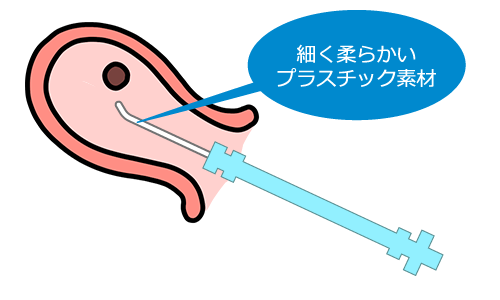
MVA uses a narrow cannula connected to a hand-operated aspirator to remove pregnancy tissue from the uterus.
Swipe to scroll the table
| Features | Considerations |
|---|---|
| MVA is a type of vacuum aspiration used for early surgical abortion. The clinician controls suction manually. The procedure often takes only a few minutes, although timing varies. Complications are uncommon but can include bleeding, infection, retained tissue and injury to the cervix or uterus. Individual risks are explained before treatment. The need for cervical preparation or dilation is assessed individually. MVA alone does not guarantee a pain-free procedure. |
MVA is used by healthcare facilities in Japan and internationally. Availability and suitability depend on the facility, gestational age and clinical assessment. |
EVA (electric vacuum aspiration)
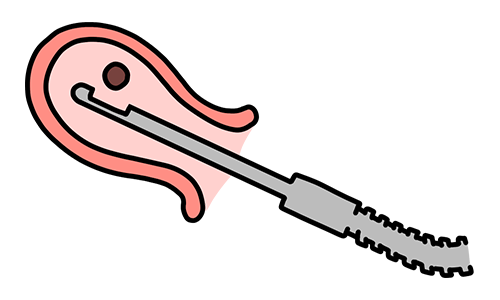
EVA uses an electric pump connected to a cannula to remove pregnancy tissue through suction.
Swipe to scroll the table
| Features | Considerations |
|---|---|
| Equipment, cannula type and cost depend on the facility and care plan. EVA provides suction using an electric pump and is another vacuum aspiration method used for surgical abortion. |
Pain, recovery, and the risk of complications depend on your health, the procedure, and anesthesia. Your doctor can explain the considerations relevant to you. Cervical preparation or dilation may be needed, depending on your assessment. |
Sharp curettage
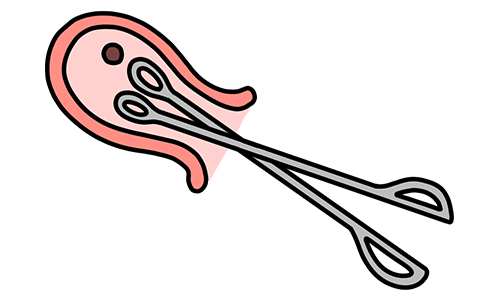
Sharp curettage removes tissue using instruments such as a curette or forceps.
Forceps are surgical instruments used to grasp tissue.
Swipe to scroll the table
| Features | Considerations |
|---|---|
| This method has a long history of use in Japan. The doctor chooses instruments according to the clinical situation. | It carries risks including injury to the uterine lining and bleeding. WHO recommends vacuum aspiration rather than routine sharp curettage for early surgical abortion. Cervical preparation or dilation may be required. Possible complications include retained pregnancy tissue and uterine injury. The shape of the uterus and other clinical factors can affect the procedure. |
Our physicians will explain the proposed method, alternatives and individual risks during consultation.
Consent for Surgical Abortion
Your informed consent is required. Under Japan’s Maternal Health Act, a spouse’s consent is generally required if you are married, including in a de facto marriage, but exceptions apply. If you are unmarried and not in a de facto marriage, a boyfriend’s consent is not generally required by law.
You can download the clinic’s English consent form or obtain a form during your visit. Please discuss your circumstances privately with the clinic if obtaining consent is difficult.
When spousal consent
may not be required
Whether you need a spouse’s consent depends on your marital circumstances and any applicable exceptions. The requirements for a spouse and an unmarried partner are not necessarily the same.
The clinic will assess your circumstances, including situations such as:
- Pregnancy resulting from sexual assault
(the perpetrator’s consent is not required) - A spouse who has died after the pregnancy began
- A spouse whose identity or whereabouts are unknown
- A spouse who cannot express their wishes; difficulty making contact requires individual assessment
Please contact us if you are unmarried, unable to obtain a spouse’s consent, or concerned about your safety. Our clinic also requests a parent’s or guardian’s consent for surgery if you are under 18. This is our clinic’s policy.

We protect your privacy and do not routinely share information with family members or others without your consent. Exceptions may apply when disclosure is required by law or needed in an emergency.
If you feel unable to discuss your situation with others, you can start by speaking with our clinic.
What to Expect: Step by Step

STEP 1
Consultation with a designated physician
about your pregnancy and options
“I have a positive pregnancy test and do not know what to do.”
“I would like to understand the procedure.” You are welcome to discuss questions or concerns with a physician designated under the Maternal Health Act. You do not need to have made a final decision before seeking advice.
Your partner is welcome to attend with you. We do not offer consultations for a male partner attending on his own.
Where appropriate, you can have an examination and preoperative tests on the day of your consultation. We will explain the procedure, anesthesia, potential complications, and preparation.

STEP 2
First visit: examination and preoperative tests
The initial assessment includes an examination and tests such as ultrasound and blood tests as needed.
We will ask about your last period, previous pregnancies, births or abortions, asthma, heart or neurological conditions, allergies, and other relevant medical history.
Please tell us about any concerns or questions.

STEP 3
On the day of surgery:
payment and consent documents
Please complete payment before the procedure. VISA and Mastercard are accepted.
Please provide your signed consent and any additional consent documents that apply to your circumstances. Spousal consent requirements and exceptions are assessed individually.
You can complete the necessary forms at the clinic. Please contact us beforehand if you have difficulty obtaining any required consent.

STEP 4
Anesthesia
After you change into a gown, we will insert an IV line and give you the anesthetic medication.
We check that the IV anesthesia has taken effect before starting. The team monitors you throughout the procedure and manages any discomfort.
You may feel drowsy or dizzy after anesthesia. You will rest until the team confirms that you have recovered sufficiently to go home.

STEP 5
Outpatient surgical abortion
We monitor your condition throughout the procedure, including your heart rhythm using an ECG monitor.
We use MVA (manual vacuum aspiration). The procedure itself often takes about 3–5 minutes, although timing and recovery vary with your stage of pregnancy and health.

STEP 6
Rest in the recovery area
You may feel drowsy for a while after the procedure because of the anesthesia.
You will rest in a private recovery area, usually for about 30–60 minutes or longer if needed.

STEP 7
Going home
You can go home once the team confirms that you have recovered sufficiently. Do not drive a car, ride a motorcycle or bicycle, or operate machinery for the rest of the day.

STEP 8
Follow-up appointment
At your follow-up appointment, we will assess your recovery and perform an ultrasound if appropriate.
For patients interested in starting a combined or progestin-only pill, our clinic generally schedules a review around 10 days after surgery. The doctor will give individual advice on the start date and interim contraception.
Other patients are generally asked to return 2–4 weeks after the procedure, unless an earlier review is needed.
Please ask about future contraception, including Mirena and oral contraceptives.
If recovery is uncomplicated, further routine visits may not be needed after the scheduled follow-up. Contact us sooner if symptoms occur.
We can discuss Mirena, combined pills, and progestin-only pills based on your health and preferences.
Future Pregnancy and Contraception
It is common to have questions about future pregnancy before or after an abortion.
We can explain recovery, possible effects on fertility and contraception options.
Future pregnancy
An uncomplicated abortion does not usually affect your ability to become pregnant in the future.
Rare complications, such as infection or intrauterine adhesions, can affect fertility. Your individual risks should be discussed with the doctor.
MVA uses suction through a cannula to remove tissue. It is a recognized early surgical abortion method, but it is not risk-free.
Understanding your recovery and attending follow-up appointments can help address concerns.
At follow-up, we can discuss both your physical recovery and how you are feeling emotionally. Please ask for support if distress persists or affects your daily life.
Sex after abortion
Please follow your doctor’s discharge instructions about restarting sexual activity. Wait until you feel ready and symptoms have settled; if there is pain, bleeding or concern about recovery, ask the clinic before resuming.
Effective contraception is important.
Ovulation can return before your next period, so a new pregnancy is possible soon after an abortion. Discuss when to start Mirena, a combined pill or a progestin-only pill and whether backup contraception is needed.
Contraception Options at Our Clinic
After treatment, you can discuss contraception if you do not wish to become pregnant again.
Options include Mirena, combined oral contraceptives and progestin-only pills, depending on your health and preferences.
Mirena
Provides contraception for up to 5 years
with the replacement schedule confirmed by your doctor.
May suit people who:
Prefer not to take a pill every day
Would like longer-term contraception
Combined oral contraceptive pill
A daily oral contraceptive.
Some formulations may also help period pain or other menstrual symptoms. Benefits, approved uses, and suitability vary.
May suit people who:
Can follow a daily pill schedule
Would also like advice about menstrual symptoms
Progestin-only pill
An oral contraceptive without estrogen.
May be an option for people who:
Cannot take certain combined pills
Need to consider smoking, age, or other health factors when choosing contraception
Mirena (intrauterine system)
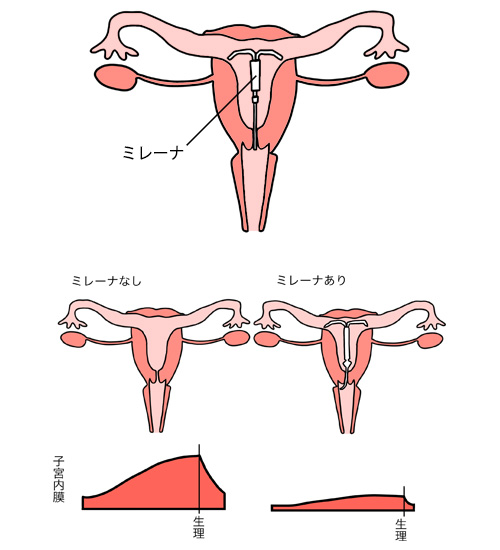
Mirena is a small, T-shaped intrauterine system that provides highly effective contraception. At our clinic, it is used for up to 5 years. Your doctor will explain its approved uses and when it should be replaced.
It does not require daily dosing and may reduce menstrual bleeding or pain. Side effects and suitability will be discussed before insertion.
Combined and progestin-only pills

Oral contraceptives must be taken correctly every day. Missed pills and other factors can reduce their effectiveness. Benefits for menstrual symptoms and approved uses differ between formulations.
Progestin-only pills contain no estrogen and may be an option for some people who cannot use combined pills. They are not suitable for everyone, and the doctor will review your history and other medicines.
The best option depends on your medical history and circumstances. Please discuss this with your doctor.
Surgical Abortion Fees
Induced abortion is generally self-funded in Japan and is not routinely covered by public health insurance.
Fees depend on your stage of pregnancy, the procedure, and any additional care needed. Please ask for a total estimate, including any applicable taxes, before agreeing to treatment.
How gestational age affects fees
The basic procedure fee varies by gestational age. The additional charges listed below also apply.
From 12 weeks, treatment at another appropriate facility is required. Inpatient and administrative costs may apply. This clinic does not perform abortions at 12 weeks or later.
Swipe to scroll the table
| Gestational age | Fee (JPY) |
|---|---|
| Up to 7 weeks and 6 days | JPY 79,800 |
| 8 weeks to 8 weeks and 6 days | JPY 89,800 |
| 9 weeks to 9 weeks and 6 days | JPY 99,800 |
Swipe to scroll the table
| Anesthesia | JPY 29,800 |
|---|
MVA procedure charge
Swipe to scroll the table
| Item | Fee (JPY) |
|---|---|
| MVA (manual vacuum aspiration) | JPY 39,800 |
Additional charges apply in the following circumstances. Please ask for a total estimate.
- Same-day procedures, weekends or public holidays
- Pregnancy from 10 weeks to before 12 weeks
- No previous childbirth; previous cesarean delivery; asthma; use of psychotropic medication; twins; uterine fibroids or adenomyosis; or other relevant conditions, as assessed by the clinic
- The preoperative consultation and tests are charged separately at JPY 14,900.
Pregnancy Support Benefits in Japan
Pregnancy support benefits are administered by local municipalities. Eligibility depends on the program’s requirements, not simply on receiving treatment at this clinic.
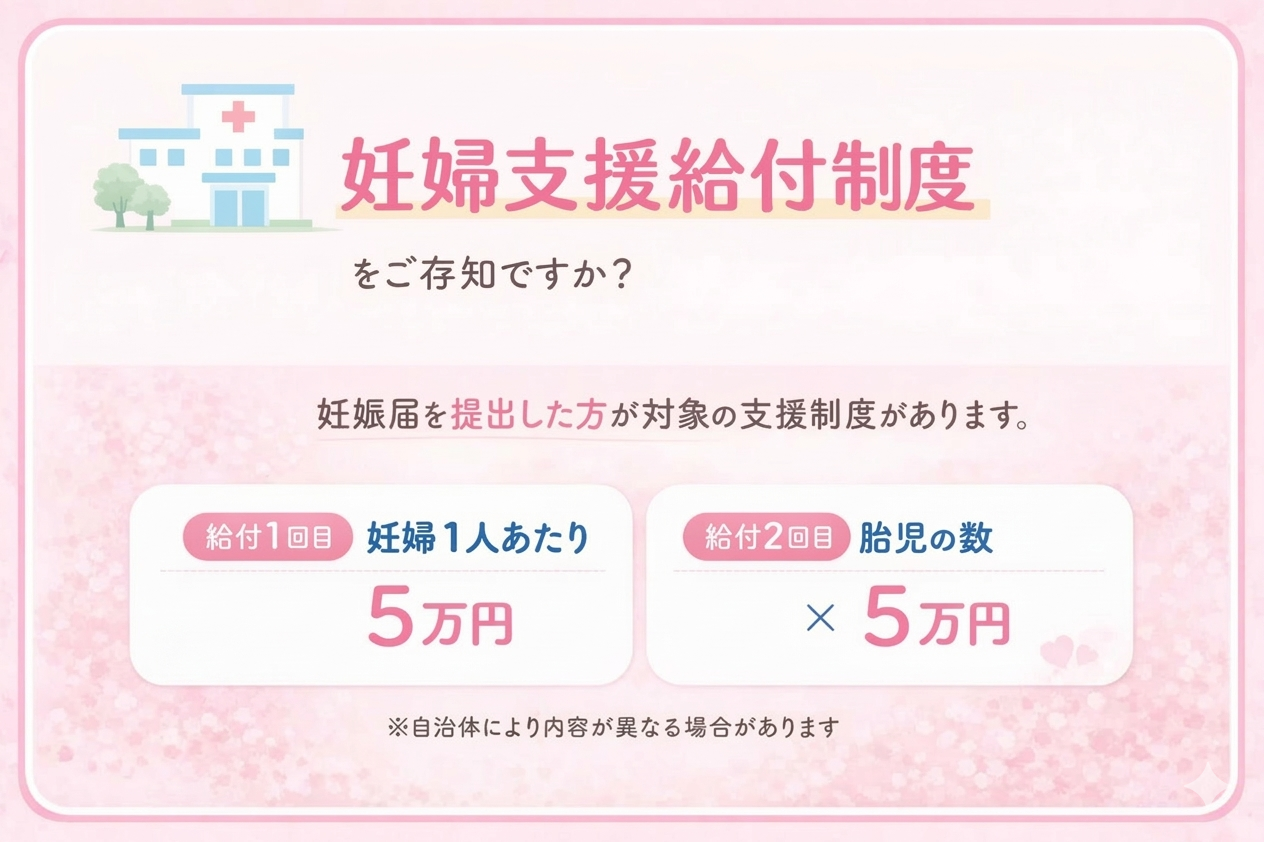
Eligible applicants may receive JPY 50,000 after their application is approved, plus JPY 50,000 for each fetus after submitting the required notification. You may still be eligible after an abortion if a doctor has confirmed fetal cardiac activity. Residency and other application requirements apply.
Contact the municipality where you live to check eligibility, required documents, deadlines, and payment timing. Do not delay appropriate medical care to qualify for a benefit. Payment is not guaranteed by the clinic.
Medical Expense Tax Deductions
Some abortion expenses may qualify for Japan’s medical expense deduction when the relevant conditions are met. Keep your receipts and consult the tax office or a qualified adviser.
The National Tax Agency states that abortion performed by a physician under the Maternal Health Act can be included in qualifying medical expenses. National Tax Agency: “Abortion expenses” (Japanese)
Japan’s medical expense deduction covers qualifying expenses paid during the calendar year for yourself or family members with whom you share household finances, after subtracting relevant reimbursements. The threshold is generally JPY 100,000, although a lower income-based threshold may apply, and claiming the deduction on your tax return may reduce your taxable income. It does not mean that the full cost of treatment will be refunded.
If you are concerned about privacy when filing a tax return,please ask the tax office how your records and any related notices will be handled. We cannot advise on every situation involving tax documents or household correspondence.
Payment Methods
We accept cash and credit cards (VISA and Mastercard).

Frequently Asked Questions
Before your visit
How much does surgical abortion cost?
Induced abortion is generally self-funded and not routinely covered by public health insurance in Japan.
The basic procedure fee is JPY 79,800 up to 7 weeks and 6 days, JPY 89,800 at 8 weeks–8 weeks and 6 days, and JPY 99,800 at 9 weeks–9 weeks and 6 days. Anesthesia (JPY 29,800), MVA (JPY 39,800) and preoperative consultation/tests (JPY 14,900) are additional.
Gestational age, your condition and treatment arrangements affect the total. Seek assessment promptly so that the doctor can explain your options.
Please request a total estimate, including any additional charges and applicable taxes, before agreeing to treatment.
Additional charges may apply depending on your health and circumstances.
Is financial support available?
Japan’s pregnancy support benefit may cover eligible people who undergo abortion after fetal cardiac activity has been confirmed by a doctor. Benefits are generally JPY 50,000 after certification plus JPY 50,000 per fetus after the required notification. Eligibility and applications are handled by your municipality.
If you have financial concerns, contact your local city or ward office. Payment is not automatic, and residency, documentation and deadlines should be checked individually.
Can I pay by credit card or installments?
Cash, VISA and Mastercard are accepted.
For installment options, contact your card issuer directly. Availability depends on your card agreement.
Is abortion covered by public health insurance?
Induced abortion is generally self-funded. Charges depend on gestational age, the treatment method, anesthesia and any additional care.
The clinic will explain the proposed treatment and fees during consultation. Please ask about any unclear charges before treatment.
Can I have an abortion on the same day as my first visit?
This depends on gestational age, health, test results, fasting preparation, consent arrangements and surgical availability. An examination and ultrasound are needed first.
Our clinic may offer same-day surgery for suitable patients, but there are limited surgical slots.
If repeated visits are difficult, contact us promptly to discuss your needs. We cannot guarantee same-day treatment before assessment.
Please call or book online in advance if you would like same-day care.
How far into pregnancy can I have an abortion?
In Japan, abortion under the Maternal Health Act is generally permitted before 22 completed weeks of pregnancy (up to 21 weeks and 6 days), subject to legal and clinical requirements. Our clinic provides surgical abortion only before 12 weeks, up to 11 weeks and 6 days.
Methods, costs and care arrangements change from 12 weeks. Inpatient treatment at an appropriate facility is generally needed.
If you are unsure of your gestational age, arrange a consultation promptly. The doctor will assess the pregnancy and explain appropriate care.
Can patients under 18 receive care?
Young people can seek advice about pregnancy and abortion. Our clinic requests a parent’s or guardian’s consent for surgery if you are under 18. This is our clinic’s policy.
Please seek assessment promptly if pregnancy is possible. Gestational age affects the available options, documents and timing.
You can discuss worries about your circumstances privately with the clinic.
Can I receive care without my parents knowing?
We protect patient confidentiality and do not routinely disclose treatment information to others without your consent, subject to legal obligations and emergency needs.
If you are under 18, our clinic requests a parent’s or guardian’s consent for surgery. We also ask for an emergency contact. Please discuss any concerns about family contact or your safety with us before treatment.
If privacy or safety is a concern, please explain your situation when booking or during consultation so that arrangements can be discussed.
Can I have an abortion without my boyfriend’s or partner’s consent?
Please tell us if you cannot contact a partner, feel unsafe discussing the pregnancy, or are unable to obtain consent.
If you have no spouse and are not in a de facto marriage, a boyfriend’s consent is not generally required by law. We assess spousal consent requirements and exceptions individually and may ask for an emergency contact.
Please ask us which documents you need. You do not have to resolve every question about consent before seeking advice.
Will the procedure hurt?
We use IV anesthesia to reduce pain and distress. Many patients have little or no awareness of the procedure, but individual experiences and responses to anesthesia vary.
The need for cervical preparation or dilation is assessed separately. It may still be necessary when MVA is used.
Please discuss any concerns about pain or anesthesia with the doctor.
What is MVA?
MVA (manual vacuum aspiration)uses a hand-operated aspirator to remove pregnancy tissue through a narrow cannula. It is widely used for early surgical abortion.
Unlike sharp curettage, which uses instruments to scrape the uterine lining, MVA removes tissue by suction. The doctor will explain the method and possible complications.
Cervical preparation is assessed individually, and intravenous anesthesia is used for pain management at this clinic.
You can ask about the differences between methods, recovery, future pregnancy or any other concerns during consultation.
How long does the procedure take?
The MVA procedure itself often takes about 5 minutes, but timing varies with gestational age and your condition.
Your visit also includes assessment, ultrasound, discussion of your care, preparation, anesthesia, and recovery time. The total visit therefore takes longer than the procedure itself.
Please arrive about 40 minutes before your scheduled procedure. Some patients may be ready to leave after about 30 minutes of recovery, making the total visit around 90 minutes, but extra time may be needed. Your discharge time will depend on your recovery.
Please ask about scheduling before your visit, and do not plan to drive or undertake activities requiring alertness after anesthesia that day.
What should I bring to my first visit?
Please confirm the documents and items needed when you book, especially if requesting same-day treatment.
Please bring large sanitary pads, water to drink once you are allowed to have fluids again, a personal seal if you have one, and your My Number card if available. Ask us about alternative identification if you do not have these Japanese documents. Patients under 18 are asked to provide a parent’s or guardian’s consent for surgery.
If you have pregnancy test results, ultrasound findings or a referral from another clinic, please bring them.
Ask the clinic about preparation and documents before attending if anything is unclear.
Do I need to avoid food and drinks before surgery?
Do not eat for 6 hours or drink for 3 hours before your scheduled procedure, unless the clinic gives you different instructions. Follow the specific guidance you receive about fasting and taking regular medicines.
If you have not followed the fasting instructions, we may need to postpone the procedure. This is because stomach contents can enter the airway during anesthesia, a complication known as aspiration.
Confirm your procedure time and fasting instructions in advance. Contact us if you have eaten, had a drink, or taken medication differently from the instructions.
How should I prepare on the day?
Please follow the preoperative instructions provided when your appointment is arranged.
Bring the items and identification requested by the clinic, including large sanitary pads and applicable consent documents. If you do not have a seal or My Number card, ask about alternatives before your visit.
Remove makeup and contact lenses. The clinic asks you to remove nail polish or gel from at least one finger other than the right little finger for oxygen monitoring; discuss alternatives if this is difficult.
Do not drive a car or ride a motorcycle or bicycle for the rest of the day after IV anesthesia. Arrange suitable transport home and ask whether someone needs to accompany you.
Book in advance and contact the clinic before attending if you would like same-day treatment.
Appointments and documents
How soon after the first consultation can surgery be arranged?
Surgery may be possible on the day of your first consultation or on a later available date, depending on your assessment and preparation.
Surgical slots are limited. Please contact us in advance if you need an appointment urgently.
Is a consent form required? What if I cannot obtain spousal consent?
Your informed consent is essential. Under the Maternal Health Act, spousal consent is generally required if you are married, including in a de facto marriage, but exceptions apply. If you are unmarried and not in a de facto marriage, a boyfriend’s consent is not generally required by law.
Exceptions and difficult circumstances are assessed individually. The perpetrator’s consent is not required following sexual assault. Please contact us if you cannot safely obtain consent or are unsure which requirements apply to you.
Up to how many weeks of pregnancy does your clinic provide abortion care?
Japan’s legal and clinical framework generally permits abortion before 22 completed weeks under applicable conditions.
Our clinic performs early surgical abortion only before 12 weeks: up to 11 weeks and 6 days.
We do not perform abortions from 12 weeks onwards.
If you are approaching the latest stage treated at our clinic or may need another facility, please seek advice promptly.
Can teenagers and students attend?
Yes. Teenagers and students are welcome to seek advice.
Our clinic requests a parent’s or guardian’s consent for surgery if you are under 18. Please contact us if obtaining it would be difficult or could put you at risk.
The procedure and anesthesia
How long is the surgery itself?
The MVA procedure commonly takes around 5 minutes, with an approximate range of 3–10 minutes. Your procedure may take longer depending on clinical needs.
Preparation and recovery add time to the visit.
Can I go home the same day?
Yes, if outpatient treatment is suitable for you.
You usually rest for around 30–60 minutes or longer after surgery, then go home only when the team has assessed your recovery and approved discharge.
Do you offer abortion pills?
Our clinic does not provide medication abortion.
Medication abortion uses prescribed medicines under medical supervision and has specific eligibility and follow-up requirements. Bleeding, pain, and other side effects may occur. These medicines do not treat an ectopic pregnancy. If you prefer medication abortion, ask a provider that offers it about availability and suitability.
Do not obtain abortion medicines through unverified websites or use them without appropriate medical assessment and instructions.
What pain might occur during or after surgery?
Intravenous anesthesia is used to manage pain during surgery; experiences and responses vary.
Cramping similar to period pain can occur afterward as the uterus contracts. Use prescribed pain relief as instructed. Severe or worsening pain needs medical advice.
After your procedure
What should I know about recovery?
Swipe to scroll the table
| Rest | Take it easy for the first few days, depending on how you feel. Do not plan to return to work or school, or do activities requiring alertness, on the day you receive IV anesthesia. |
|---|---|
| Bathing | Please shower only on the procedure day. Follow your individual discharge instructions before resuming baths. |
| Bleeding | Light bleeding can continue for days or weeks. Heavy bleeding, faintness, fever or worsening pain requires prompt assessment. |
| Sex | Wait until you feel ready and symptoms have settled. Follow your clinician’s advice about timing and contraception. |
| Food and alcohol | Resume food and fluids according to your recovery instructions. Avoid alcohol on the day of anesthesia and for any longer period advised with your medicines. |
| Smoking | Discuss smoking and contraception with the doctor. Smoking affects your health risks and whether estrogen-containing pills are suitable for you. |
When can I return to work or school?
Recovery depends on your stage of pregnancy, the procedure, and your health. Because IV anesthesia affects alertness, do not plan to work, attend school, drive, or perform other activities requiring concentration on the procedure day.
Many patients can resume light daily activities after recovery, often from the following day, but bleeding, cramping or fatigue can require more rest.
If your work is physically demanding, you may need several days off. Follow your doctor’s advice and seek help for concerning symptoms rather than pushing yourself to return before you are ready.
Do I need a follow-up visit?
Yes. We arrange a follow-up appointment to check your recovery.
Patients who wish to discuss pills are generally asked to return around 10 days after surgery. Other patients are usually seen after 2–4 weeks. Your doctor will confirm the timing, your contraception plan, and any ultrasound or other checks needed.
If recovery is uncomplicated, further routine visits may not be needed. New or worsening symptoms require earlier contact.
Can I become pregnant again afterward?
An uncomplicated abortion does not usually affect your ability to become pregnant in the future.
We use MVA and discuss possible complications, including rare problems that can affect fertility. Please raise any concerns about future pregnancy during consultation.
Ask at follow-up about recovery, pregnancy planning and contraception. Ovulation can return before the next period.
What contraception can I use after an abortion?
A new pregnancy is possible before your next period because ovulation may return soon after abortion. Discuss contraception early if you do not wish to become pregnant.
Options at our clinic include combined pills, progestin-only pills and Mirena. Suitability, side effects, cost and correct use differ.
Mirena may be inserted during the procedure if suitable. The doctor will explain eligibility, risks and when contraceptive protection begins.
Please ask about the options and any interim or backup contraception needed while starting a method.
When will my period return?
Periods often return about 1–2 months after the procedure, although timing varies. Hormonal contraception can also change your bleeding pattern.
Your first periods may differ in timing, flow or duration. Stress and pre-existing irregular cycles may also affect timing, but persistent symptoms should be assessed.
Contact the clinic if your period has not returned after about 2 months, if a pregnancy test is still positive when you were advised to check, or if you have abnormal bleeding or other concerns.
When can I start a combined or progestin-only pill?
We generally discuss starting a pill at a follow-up visit around 10 days after surgery. The timing can be adjusted to your needs. Ask your doctor when to start and what contraception to use in the meantime.
Tell the clinic if you would like a prescription and confirm how and when to start your particular pill.
When will nausea improve?
Pregnancy-related hormone levels decline gradually after treatment. Nausea may take several days or around 1–2 weeks to settle, depending on your circumstances.
Tell the clinic if nausea is troublesome. Persistent or worsening symptoms may need assessment and medication.
Will I have pain afterward?
Cramping can occur as the uterus contracts after the procedure.
This is often similar to period pain, but severity and duration vary.
Use pain relief as prescribed. Contact the clinic promptly for severe, persistent or worsening pain, fever, heavy bleeding, faintness or feeling very unwell.
If you are unsure whether symptoms are part of recovery, ask the clinic rather than waiting in discomfort.
When can I take a bath?
Please shower only on the procedure day. You may be able to take a bath from the next day if bleeding is not heavy and you feel well, but follow your own discharge instructions.
Light bleeding can last for days or weeks. Avoid prolonged or very hot baths if advised, particularly while bleeding or feeling faint.
If bleeding is heavy, you have pain or fever, or recovery is not progressing as expected, contact the clinic before resuming baths.
How long does bleeding last?
Bleeding varies from person to person. It may last a few days to about 2 weeks, with lighter spotting sometimes continuing for longer.
The amount can range from spotting to period-like bleeding. Your clinician will explain what to expect and when to seek help.
Heavy bleeding, faintness, severe pain, fever or feeling very unwell requires prompt medical advice. Seek urgent care if symptoms are severe or the clinic is unavailable.
When can I have sex again?
Follow your individual aftercare instructions. Wait until you feel ready and pain or bleeding has settled; ask the clinic if you are unsure about timing.
Pain, fever, ongoing heavy bleeding or other concerning symptoms need assessment before resuming sex.
Pregnancy can occur before your first period. Use appropriate contraception when resuming sex and ask about when your chosen method becomes effective.
Other questions
I may be pregnant but I am not sure whether I want an abortion. Can I talk to someone?
You can seek a consultation without committing to a procedure. Decisions about pregnancy can be emotionally difficult, and support is available.
A medical assessment can confirm gestational age and assess the pregnancy’s location. Knowing your options and time frame can help you make an informed decision.
Our clinic offers abortion consultations and can explain the procedure, possible complications, fees and follow-up. Please tell us about any concerns.
Will my family or workplace be told?
Healthcare professionals have confidentiality obligations.
We do not routinely tell family members, employers, or others about your attendance or treatment without your consent. Exceptions may apply when disclosure is required by law or needed to protect someone’s safety or provide emergency care. Please discuss any specific privacy concerns with us.
I have abdominal pain during pregnancy. What should I do?
Abdominal pain during pregnancy can sometimes be caused by an ectopic pregnancy, which needs prompt assessment and can become a medical emergency. Seek medical advice promptly if you have the symptoms below. Severe pain, shoulder-tip pain, dizziness, or fainting requires urgent care rather than a routine appointment.
- Sharp or persistent pain on one side of the lower abdomen
- Vaginal bleeding or brown discharge, even a small amount
Appointments and Inquiries
You are welcome to seek advice even if you are not sure whether to have an abortion. We will assess your pregnancy and health and discuss your options.
If there are no appointments available online, please contact us. A consultation or same-day procedure may still be possible, depending on the assessment and surgical schedule.
For urgent appointment inquiries, call Sannomiya Ekimae Ladies Clinic during opening hours. Our staff use limited English and smartphone translation apps to help us communicate.
Five Things to Know Before a Same-Day Procedure
1. Food and drinks before surgery
Do not eat for 6 hours or drink for 3 hours before your scheduled procedure, unless the clinic gives you different instructions. Follow the specific guidance provided when you book.
Please call to confirm the procedure time and ask how to take any regular medicines.
2. Makeup and contact lenses
Please remove makeup and contact lenses before attending.
3. Nail polish and gel nails
For the oxygen monitor, please remove nail polish or gel from one finger other than your right little finger.
If this is difficult, contact us in advance to discuss alternative monitoring arrangements.
4. Consent documents
Before the procedure, please provide your consent and any applicable additional consent documents as explained by the clinic. Whether spousal consent is needed depends on your circumstances and any applicable exceptions.
5. Travel arrangements
Do not drive a car or ride a motorcycle or bicycle for the rest of the day after anesthesia. Ask the clinic about transport and whether someone needs to accompany you home.
What to Bring
- Large sanitary pads
- A personal seal, if available; ask about alternatives
- Water or another suitable drink for when you are allowed to drink again
- Your My Number card, if available; ask the clinic about alternative identification
Please Call Before Your Visit If Any of the Following Apply
- A heart or neurological condition
- You have been told that you have a bicornuate uterus or another difference in the shape of your uterus
- You take psychotropic medication or other regular medicines that may affect anesthesia
Complete the form as instructed and bring it on the procedure day. Contact the clinic if you need help understanding the form; do not sign anything you do not understand.
Forms are also available at the clinic. We use smartphone translation apps to help explain information. An English consent form is available using the download link above. If you need an interpreter, contact us in advance to discuss what can be arranged.
You do not have to face this alone. We will listen to your circumstances and discuss the next steps at your pace.